


Spoil Removal Systems and Trench Cleaning Efficiency
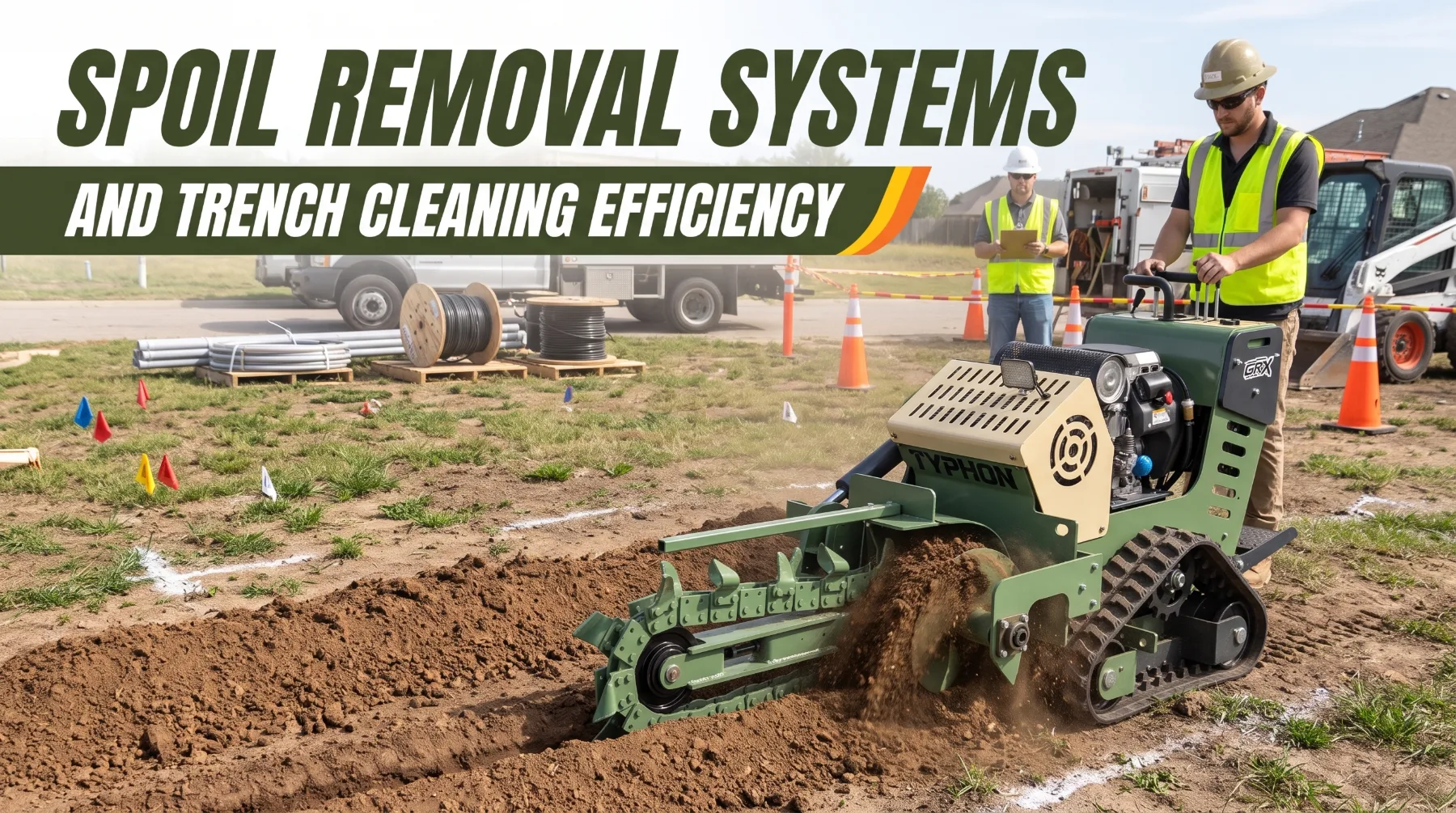
Every trenching job depends on one basic result: soil comes out of the ground and stays out. As a trencher cuts forward, the digging chain carries loosened material to the surface. The spoil removal system must then move that material clear of the cut before it falls back into the trench or piles up around the machine. When this process works well, crews get a clean, consistent trench and keep moving. When it doesn’t, productivity drops, cleanup grows, and the jobsite becomes harder and less safe to manage.
Spoil removal efficiency depends on several connected factors. The auger or conveyor arrangement, discharge direction, chain and tooth configuration, travel speed, and ground conditions all shape how cleanly material leaves the trench. A machine that cuts aggressively but can’t discharge spoil fast enough will leave loose soil along the edge and in the bottom of the cut. Conditions also change from site to site. Wet clay, rocky ground, and dry sand each place different demands on the system, and the same machine can perform very differently across them.
Contractors handling utility installation, drainage, irrigation, and other underground work gain a real advantage when they understand how these factors work together. Choosing the right equipment, running at a sustainable pace, placing spoil where it supports the next stage of work, and inspecting the system regularly all help reduce downtime and rework. The sections below explain how spoil removal systems operate and what operators can do to keep every trench clean, efficient, and safe.
How the Spoil Removal System Moves Excavated Soil
A trencher’s digging chain does two jobs at once. Its teeth break up the ground, and its motion carries loosened material up the boom toward the surface. Once the soil reaches the top of the trench, the spoil removal system takes over and moves it away from the cutting path.
On most chain trenchers, this work is handled by a spoil auger, a rotating spiral mounted near the top of the boom. As the chain delivers soil to the surface, the auger pushes it sideways and deposits it beside the trench. Some machines discharge to one side only, while others can discharge to either side, which gives the operator more control over where material lands.
Larger trenchers may use a cross conveyor instead of, or alongside, an auger. A conveyor can throw spoil farther from the trench or load it directly into a truck when material needs to leave the site. This option is especially useful on roadside, urban, and right-of-way projects where there’s little room to stockpile soil.
Many trenchers also use a crumber, a shoe-shaped attachment that follows the chain and clears loose material from the trench floor. A clean floor matters when pipe, conduit, or cable must sit on a consistent grade. Loose soil left in the bottom of the cut often means extra hand cleanup before installation can begin.
Key takeaway: The digging chain lifts soil to the surface, while the auger, conveyor, and crumber move it clear and keep the trench clean, so understanding the discharge layout is the first step toward efficient spoil management.
Matching Conveyor Capacity to Cutting Output
A spoil removal system can only move a certain amount of material in a given time. If the chain produces soil faster than the auger or conveyor can discharge it, the excess has nowhere to go. It spills back into the trench, builds up around the boom, or forms an uneven pile at the edge. The result is a dirtier trench, more cleanup, and added strain on drive components.
When selecting equipment, compare the expected spoil volume with the machine’s discharge capability. A trencher sized for narrow, shallow irrigation cuts may struggle when pushed into deeper, wider utility work. Review the manufacturer’s recommended trench dimensions and operating conditions for the specific machine and boom configuration.
During operation, set a cutting pace that the removal system can sustain, taking the machine’s engine horsepower and available power into account. Watch the discharge point closely. A steady, continuous flow of spoil shows that the system is keeping up. Material building up around the auger, falling back into the trench, or discharging in irregular surges usually means the machine is advancing too fast or the engine is under excessive load. Easing off travel speed often improves overall productivity because the crew spends less time cleaning the trench afterward.
Key takeaway: Discharge capacity must match the volume the chain produces, so operators should choose a travel speed that keeps spoil flowing continuously rather than pushing the machine beyond what the removal system can handle.
Adjusting Operation for Different Ground Conditions
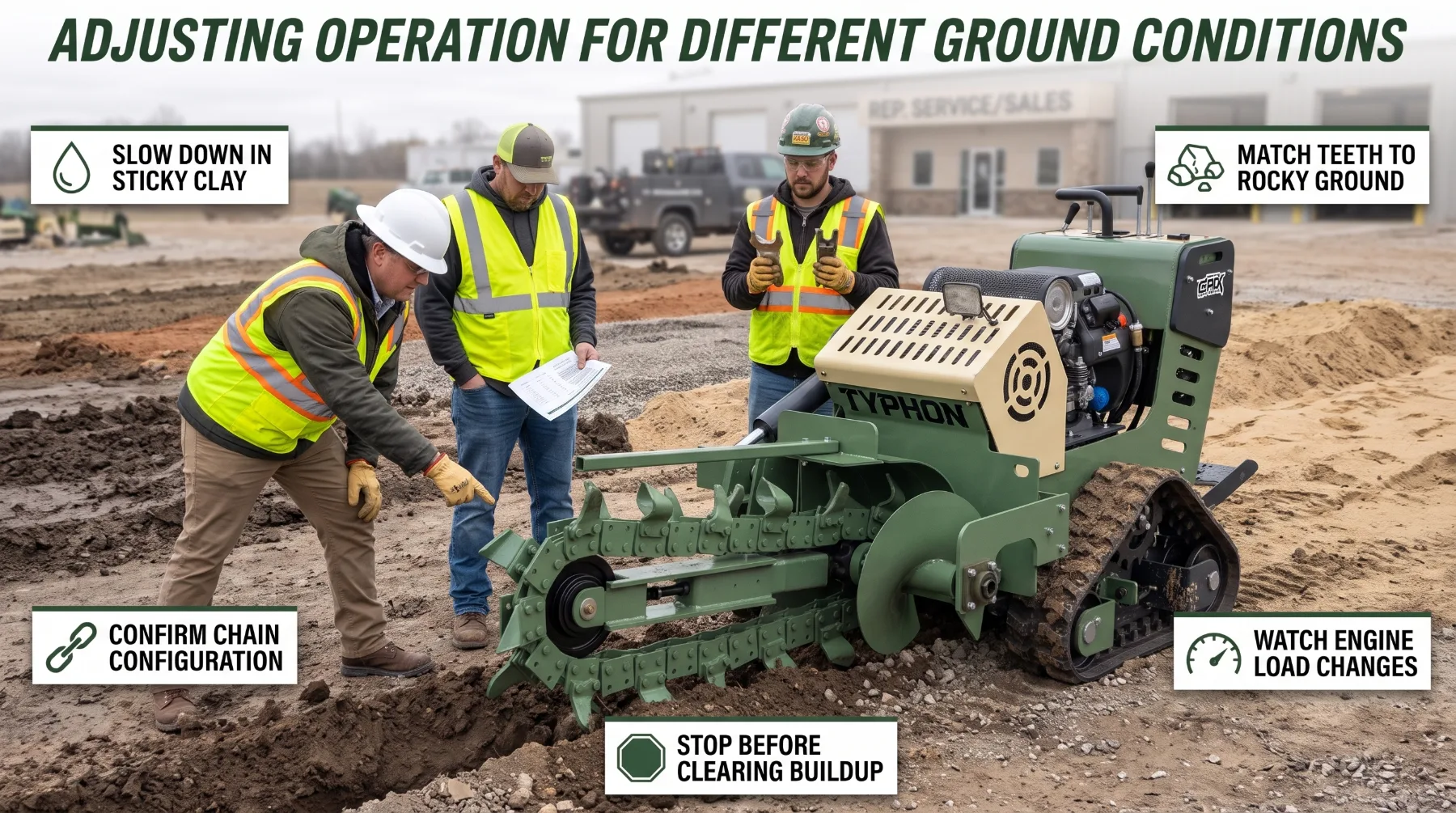
No single operating approach works on every site. Soil behaves differently depending on its composition, moisture, and density, and the spoil removal system responds to each condition in its own way. Operators who adapt their technique to the ground deliver cleaner trenches with fewer interruptions.
- Dry, loose soil: Usually flows easily through the auger and discharges cleanly, but it can slough back into the trench if piles sit too close or walls are unstable.
- Wet or sticky clay: Clings to the chain, auger flights, and conveyor surfaces, which reduces discharge efficiency and can lead to packing.
- Compacted ground: Requires more cutting effort and may break into large clumps that interrupt material flow.
- Rocky soil: Places heavy demands on teeth and chain components, and stones can jam or damage auger flights.
- Ground with roots or debris: Can wrap around rotating parts or catch in the discharge area and slow material flow.
Chain and tooth configuration also make a major difference. Different tooth styles are designed for different soils, and a chain set up for soft ground will struggle in rock or frozen material. Confirm with the manufacturer or dealer that the chain configuration suits the expected conditions before the job starts.
In difficult soil, reduce travel speed and give the chain and auger time to process material fully. Watch for early warning signs, such as spoil clinging to the auger, irregular discharge, or a noticeable change in engine load. When material begins to accumulate, stop the machine before inspecting or clearing it. A short pause to address buildup costs far less than a full blockage or a damaged component.
Key takeaway: Soil type and moisture change how spoil moves, so match the chain configuration to the ground, slow down in sticky, compacted, or rocky conditions, and stop the machine as soon as material starts to build up.
Managing Spoil Placement Along the Trench
Where spoil lands affects much more than the look of the site. It influences worker safety, trench wall stability, access for equipment, and how easily the crew can backfill later. Careful placement keeps the job organized and reduces the risk of material returning to the excavation.
Spoils placed too close to the trench edge creates several hazards. Its weight adds load near the trench wall, which can contribute to wall failure in some soils. Loose material can roll or slide back into the cut, which is especially dangerous when workers are inside the trench. In the United States, OSHA generally requires excavated material to be kept at least 2 feet from the edge of an excavation or held back with retaining devices. Always follow the excavation safety rules that apply to your location and project.
Placement should also support the way the crew works. Spoil that blocks the side where pipe, conduit, or cable will be laid forces workers to carry materials over or around piles. Spoils that crosses access routes can obstruct trucks, loaders, and emergency paths.
Use the machine’s discharge direction and working position to put this plan into action. Adjust discharge as conditions change, such as when the trench runs beside a building, fence, roadway, or existing utility. Reassess placement whenever the site layout shifts.
Key takeaway: Plan spoil placement before digging, keep material back from the trench edge in line with excavation safety requirements, and leave one side clear for installation work and site access.
Preventing Material Build-Up and Discharge Blockages
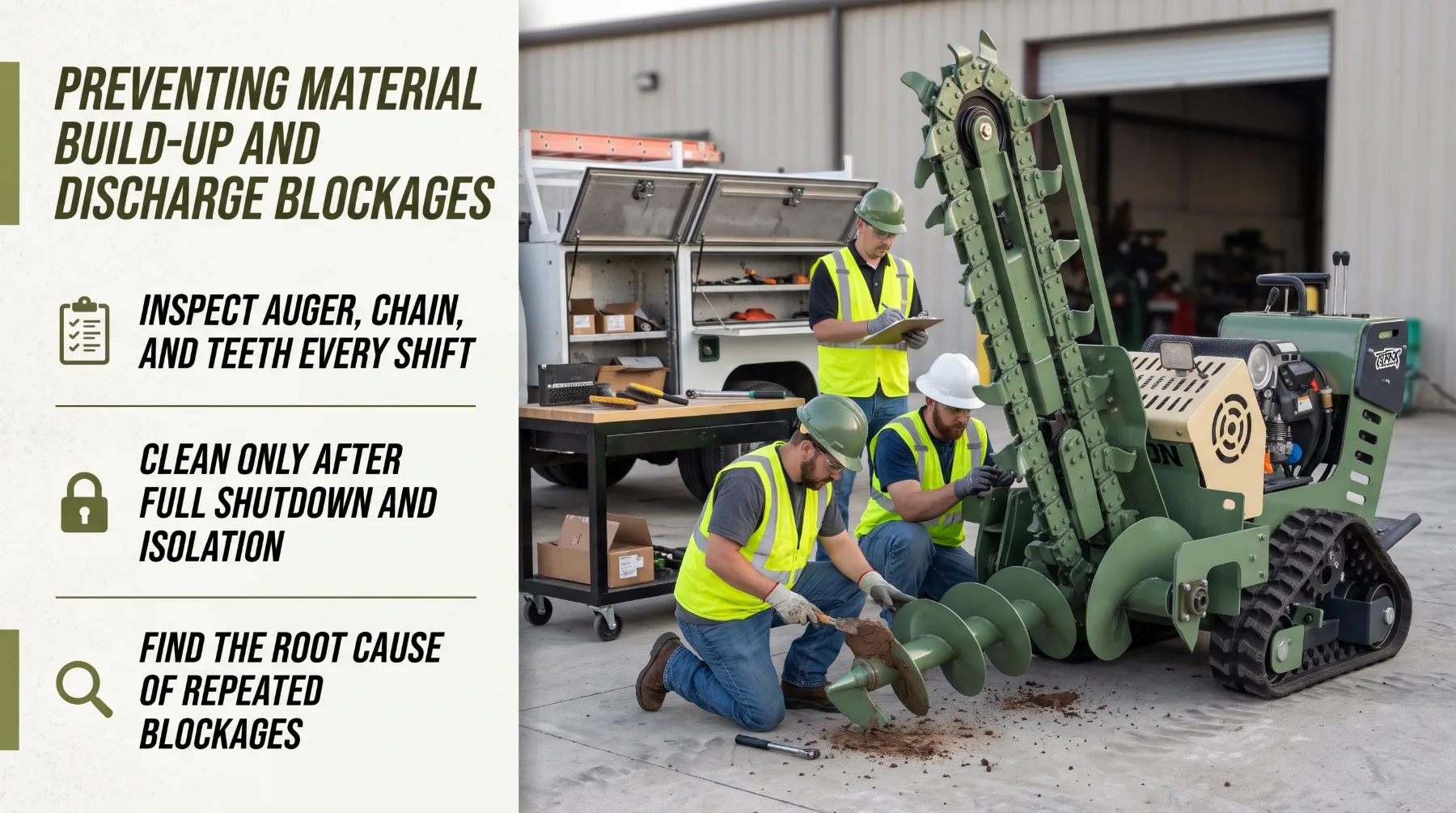
Blockages rarely appear without warning. Most start with small amounts of packed soil, worn parts, or debris that gradually restrict flow until material stops moving. Routine inspection and consistent cleaning stop these problems before they interrupt production.
Worn auger flights move less material per rotation, which lowers discharge capacity even when everything else is working correctly. Damaged teeth reduce cutting efficiency and produce uneven spoil that is harder to clear.
Clean accumulated soil from accessible areas at the end of each shift, and during the shift when conditions call for it. Always follow the manufacturer’s shutdown and isolation procedure before cleaning. Stop the engine, disengage the chain and auger, remove the key, and confirm all moving parts have come to a complete stop. Never reach into a moving conveyor, auger, or cutting mechanism, and never use hands or feet to free material from a running system. Rotating components can cause severe injury in an instant.
When blockages keep recurring, find the root cause instead of clearing the same problem repeatedly. Common causes include excessive cutting or travel speed, a chain configuration unsuited to the soil, worn or damaged discharge components, and ground conditions beyond the machine’s intended application. Keep a maintenance log that records inspections, cleaning, repairs, and recurring issues. Patterns in this record help identify parts nearing the end of their service life and reveal which sites or soils consistently cause trouble.
Key takeaway: Inspect discharge components every shift, clean only after a full shutdown and isolation, never reach into moving parts, and investigate the root cause of repeated blockages rather than simply clearing them.
Coordinating Spoil Removal with Backfilling
Spoil management doesn’t end once soil leaves the trench. Where and how material is placed directly affects pipe or cable installation, inspection, bedding, backfilling, and compaction. A well-planned approach reduces double handling and keeps every part of the crew productive.
Start by determining whether excavated soil can be reused. Suitable native soil may serve as backfill when it meets the project’s material requirements. Unsuitable material, such as soil containing large rocks, organic matter, debris, or excess moisture, may need to be hauled off and replaced with approved fill. Many projects also specify separate bedding or embedment material around pipe and conduit. Knowing these requirements in advance tells you which spoil should stay beside the trench and which should go straight into trucks.
When spoil will be reused, place it where backfill equipment can reach it efficiently. A consistent windrow along one side of the trench lets a loader or backhoe return material in a steady, controlled sequence. When material must leave the site, a conveyor that loads trucks directly eliminates a separate loading step and saves time.
Limiting how long trenches stay open also reduces exposure to weather and wall instability, which supports both safety and schedule.
Key takeaway: Plan spoil placement around reuse, hauling, installation, and inspection needs, so excavated material supports backfilling and compaction instead of creating extra handling and delays.
Conclusion
Efficient spoil removal is one of the most practical ways to improve trenching productivity, and it depends on far more than how fast a trencher can dig. The auger, conveyor, and crumber must clear material at the same rate the chain produces it, so a sustainable travel speed often delivers better results than pushing the machine to its limit. Thoughtful placement keeps spoil back from the trench edge, protects workers, preserves access routes, and leaves room for installation. Adapting to wet clay, compacted ground, rocky soil, and debris helps prevent buildup, while routine inspection and safe cleaning practices keep small issues from turning into blockages and downtime. Coordinating discharge with backfilling, hauling, and inspection ensures every load of spoil supports the next stage of the project. Before your next job, review the soil conditions, confirm your chain and removal system suit the work, plan where spoil will go, and inspect the machine thoroughly so your crew can deliver clean, consistent trenches from start to finish.
Frequently Asked Questions
What does a trencher spoil removal system do?
A spoil removal system moves excavated soil away from the cutting chain and deposits it beside the trench or, on some machines, directly into a truck. On most chain trenchers, a spoil auger at the top of the boom pushes material sideways as the chain brings it to the surface. Larger machines may use a cross conveyor to discharge spoil farther away. A crumber often works alongside these components to clear loose material from the trench floor, which produces a cleaner cut for installation.
Why does spoil sometimes build up around a trench?
Buildup usually happens when the trencher produces more material than the removal system can discharge, often because travel speed is too high for the trench size or soil type. Wet, sticky clay can cling to the chain and auger and restrict flow, while large clumps, rocks, and roots can interrupt discharge. Worn auger flights or damaged conveyor parts also reduce capacity. Slowing down, matching the chain to the ground, and keeping components in good condition all help prevent buildup.
Does spoil discharge direction matter?
Yes. Discharge direction determines where soil lands, which affects safety, access, and backfilling. Spoil should be kept back from the trench edge to reduce the risk of material falling into the excavation and to limit added load on trench walls, in line with applicable excavation safety requirements. Placing spoil on one side leaves the other side open for pipe, conduit, equipment, and workers. Planning discharge direction before trenching keeps the site organized and supports efficient backfill later.
How can operators reduce spoil removal problems?
Operators can reduce problems by running at a cutting and travel speed the removal system can handle, using a chain and tooth configuration suited to the ground, and adjusting technique for wet, compacted, or rocky soil. Inspecting the auger, conveyor, chain, teeth, and crumber before each shift helps catch wear early. Cleaning packed material regularly, always after a full shutdown and isolation, keeps the system moving freely. When blockages repeat, investigate the cause rather than repeatedly clearing the symptom.