


How to Improve Fuel Efficiency When Operating a Wheel Loader
Fuel consumption in a wheel loader is closely tied to how efficiently engine output is converted into productive work. Every operating cycle places different demands on the engine, hydraulic system, drivetrain, and tires. Extended idling consumes fuel without producing useful output, excessive wheel slip converts engine power into tire heat and ground disturbance, and partial bucket loads increase the number of travel and loading cycles required to move the same amount of material. High engine load, unnecessary acceleration, long travel distances, and poor machine condition can therefore increase fuel use even when the loader itself is operating normally.
Fuel efficiency depends on controlling these sources of unnecessary load without reducing production. Throttle management and appropriate engine speed help keep the engine within an efficient operating range, while full and properly sized bucket loads reduce the number of cycles required per ton of material. Short travel paths, controlled acceleration, reduced wheel spin, correct tire pressure, clean filters, properly maintained hydraulic and fuel systems, and matching loader size to the application can further reduce energy losses. Looking at these factors as part of the complete loading cycle provides a more accurate way to control fuel consumption while maintaining production and protecting drivetrain and hydraulic components.
How Throttle and Engine Load Management Affect Fuel Consumption
The engine burns fuel in proportion to the work it’s asked to do, so how you manage throttle and load is the single biggest lever on consumption. Running the engine at full throttle when the task doesn’t demand it simply pours fuel into no productive gain.
A wheel loader doesn’t need a wide open throttle for every task. Many jobs, repositioning, light travel, precise placement, get done cleanly at partial throttle, where the engine sips far less fuel. Full power belongs where it earns its keep: crowding a bucket into a dense pile or pushing through heavy material. Learning to match engine speed to the task, rather than pinning the throttle out of habit, cuts burn immediately.
Modern loaders help here. Many offer power or economy modes that cap engine output for lighter work, and features that automatically reduce engine speed when hydraulic and drivetrain demand drops. Use them. Running in an economy mode on lighter cycles, and reserving full power mode for the hardest digging, keeps the engine from producing, and burning, more than the work requires.
Key takeaway: The engine burns fuel to match its load, so matching throttle to the task and using economy modes on lighter work cuts consumption directly.
The Role of Operator Habits
Two operators can run the same loader on the same job and post very different fuel numbers, and the gap almost always traces back to habits at the controls. Operator technique is the most powerful, and cheapest, fuel efficiency tool you have.
Smooth Inputs Beat Aggressive Ones
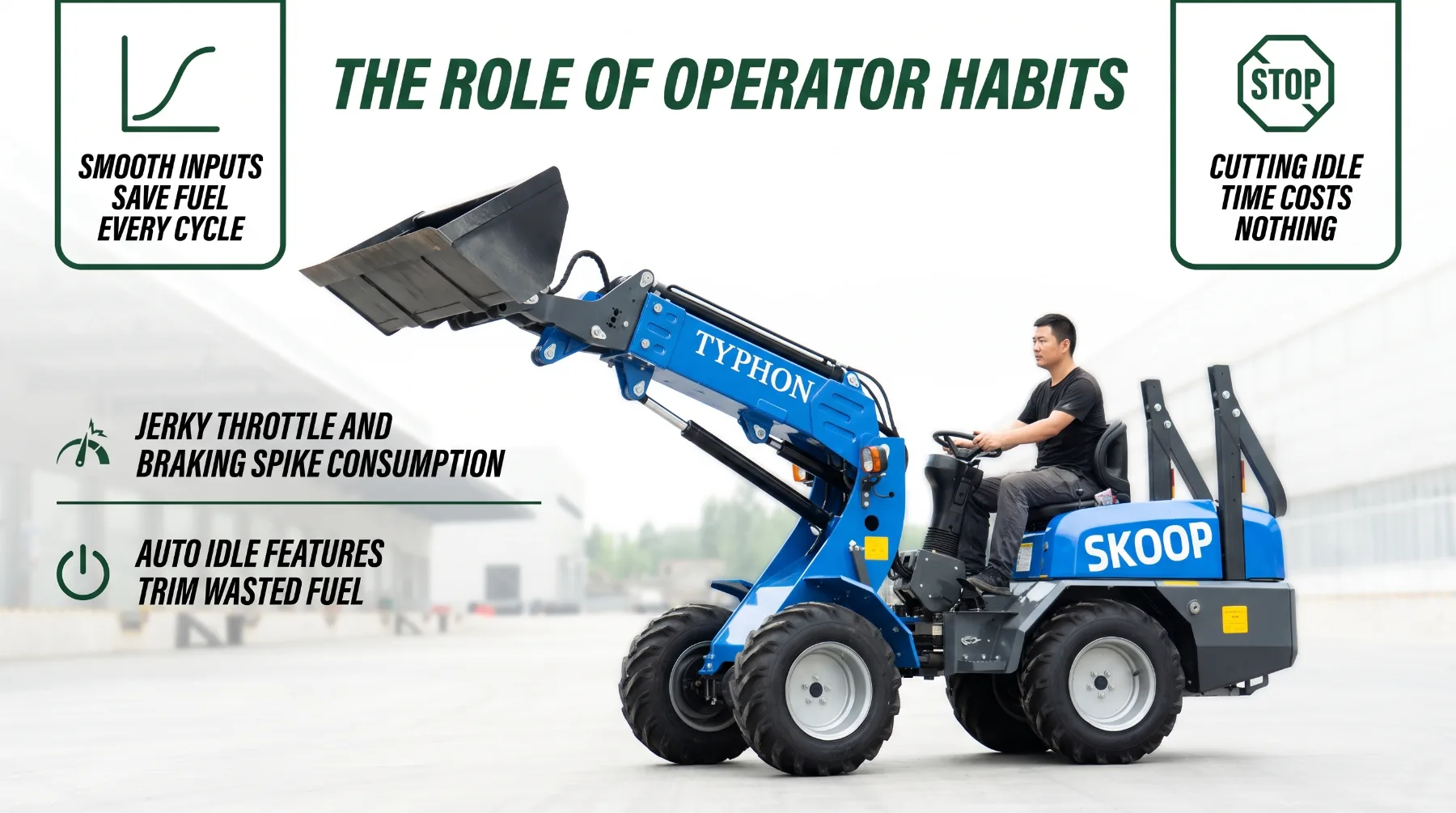
Aggressive operation burns fuel fast. Jamming the throttle, hard acceleration, sharp braking, and jerky bucket movements all force the engine and hydraulics to draw sharp bursts of fuel that gentler technique avoids. Smooth, deliberate inputs do the same work for less: steady acceleration, controlled bucket movements, and planned direction changes keep the engine working in an efficient range instead of spiking repeatedly. Smoother operation also reduces wear on the drivetrain, tires, and hydraulics, so it protects more than the fuel bill.
Cut Unnecessary Idling
Idling is fuel burned for nothing. A loader left running while the operator waits on a truck, takes a break, or steps away converts diesel straight into cost with zero work in return. Coach operators shut down during any extended wait rather than letting the machine idle. Many loaders include auto idle or auto shutdown features that reduce engine speed or stop the engine after a set idle period, enabling them. Trimming idle time is one of the easiest fuel savings available, and it costs nothing but attention.
Key takeaway: Smooth inputs and minimal idling are the highest return, no cost fuel habits, saving diesel on every cycle while reducing machine wear.
Proper Bucket Loading Techniques
How the operator fills the bucket decides how much fuel each ton of material actually costs. The goal is simple: move the most material per pass, so the machine completes the job in the fewest cycles.
A full bucket loaded in one clean pass is far more fuel efficient than several partial scoops. Every partial load still demands a full cycle, drive in, lift, reverse, travel, dump, burning nearly the same fuel to move less material. Fill the bucket properly the first time, and you spread that cycle’s fuel across a full load rather than a fraction of one.
Good loading technique makes full passes possible. Drive the bucket into the pile at the right angle, use the machine’s breakout force and a smooth crowd and curl motion to fill it in a single confident pass, and avoid repeatedly digging at the same spot. On dense material, attacking the pile at its base and letting the loader’s power do the work fills the bucket cleanly without wheel spin. An operator who consistently loads full buckets moves the same tonnage in fewer cycles, and fewer cycles mean less fuel.
Key takeaway: Loading a full bucket in one clean pass spreads each cycle’s fuel across more material, so fewer cycles move the same tonnage for less diesel.
Travel Path Optimization and Minimizing Movement
Every foot a loader travels burns fuel, so how the work area is laid out has a direct effect on consumption. Long hauls between the pile and the truck, unnecessary maneuvering, and wasted movement all add cycles that cost diesel without adding output.
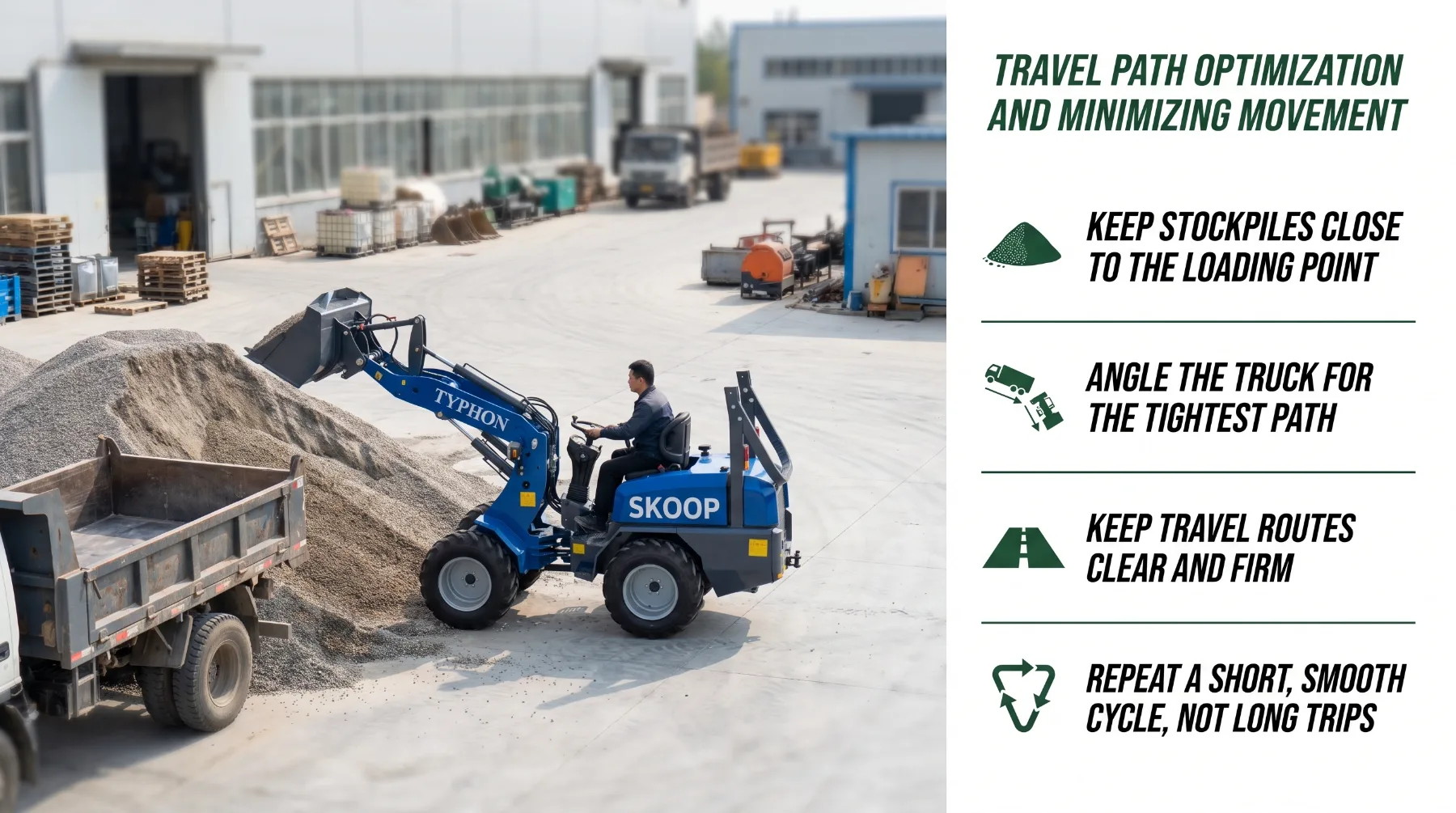
The most effective technique is the short, efficient loading cycle. Position the truck close to the material and at a smart angle so the loader travels the least distance and turns the least between filling and dumping. The classic “V pattern”, a short, tight path from pile to truck and back, minimizes travel and direction changes, and it’s a proven way to cut both cycle time and fuel burn.
Site organization matters just as much as operator technique here:
- Keep stockpiles close to the loading or dumping point to shorten every haul.
- Position trucks at an angle that lets the loader load and turn in the tightest practical path.
- Keep travel routes clear and firm so the machine isn’t fighting obstacles or soft ground.
- Plan the work area so the loader repeats a short, smooth cycle rather than long, wandering trips.
Small layout improvements compound fast. Shaving a few seconds and a few feet off a cycle repeated hundreds of times a shift adds up to a meaningful fuel saving by day’s end.
Key takeaway: Shorter travel paths and tight loading cycles cut fuel on every pass, so positioning material and trucks close and clear pays off across the whole shift.
Tire Pressure and Machine Maintenance as Fuel Efficiency Factors
A well maintained loader burns less fuel than a neglected one doing identical work, so maintenance is a genuine fuel strategy, not just a reliability one. Small mechanical shortfalls quietly raise consumption every hour the machine runs.
Tire pressure is an easy example with real impact. Underinflated tires increase rolling resistance, forcing the engine to work harder, and burn more fuel, just to move the machine. They also wear faster and hurt traction, which can lead to fuel wasting wheel spin. Checking and maintaining correct tire pressure is a quick, low cost habit that protects both fuel economy and tire life.
The rest of the machine tells the same story. Keep these maintenance items on schedule:
- Air filters: A clogged filter starves the engine of air and forces it to burn fuel less efficiently. Replace on schedule and sooner in dusty conditions.
- Fuel system: Clean injectors and filters keep combustion efficient and fuel burning cleanly.
- Engine service: Regular oil and filter changes with the correct fluids keep the engine running at its designed efficiency.
- Hydraulic system: Correct fluid levels and clean filters keep the hydraulics transmitting power efficiently, so the engine isn’t straining to make up losses.
- Cooling system: A clean cooling system keeps the engine at its efficient operating temperature rather than working hot.
None of these steps is expensive on its own, but together they keep a loader delivering the fuel economy it was built for, and catch small problems before they grow into costly ones.
Key takeaway: Correct tire pressure and routine maintenance keep a loader running at its designed efficiency, so disciplined upkeep directly lowers fuel burn.
How Machine Sizing and Load Matching Reduce Wasted Fuel
The right sized loader for the job is one of the most overlooked fuel efficiency factors, and it’s decided before the machine ever reaches the site. A mismatch between machine and workload wastes fuel in both directions.
An undersized loader forced to run near its ceiling all day works its engine hard, burns fuel inefficiently, and often needs extra passes to move material a larger machine would handle in one. An oversized loader wastes fuel the opposite way, burning more diesel to move its own greater mass and unused capacity on light work that never calls on its full power. Either way, you pay for a poor fit at the fuel pump.
The goal is to match the machine’s capacity to the material and duty cycle it will genuinely face. A loader whose bucket size and power suit its typical loads completes the work in efficient, full capacity cycles without straining or hauling unused muscle. Match the bucket to the material and the truck too, a bucket sized to fill the truck in a clean number of passes avoids the wasted partial cycle that burns fuel for a fraction of a load. Right sizing across the fleet, so each machine fits its regular work, quietly trims fuel waste on every shift.
Key takeaway: Matching loader size and bucket capacity to the real workload keeps every cycle efficient, so right sizing eliminates the fuel a mismatched machine wastes.
Conclusion
Wheel loader fuel efficiency depends on consistent operating practices, proper maintenance, and selecting a machine that matches the workload. Throttle control should follow the task, with economy modes used during lighter work to avoid unnecessary engine output. Smooth acceleration, reduced idling, full bucket loading, and shorter travel paths can increase material moved per cycle while reducing fuel used per ton. Correct tire pressure and timely maintenance of filters, fluids, cooling systems, and other components help prevent efficiency losses caused by excessive resistance or poor engine performance. Machine and bucket sizing should also match material density, payload requirements, and duty cycle to avoid operating an oversized or undersized loader inefficiently. Monitoring fuel use alongside production output helps identify inefficient operating patterns and confirms whether changes are reducing fuel consumption without sacrificing productivity.
Frequently Asked Questions
What’s the single most effective way to cut a wheel loader’s fuel consumption?
Operator habits usually deliver the biggest savings with little or no investment. Smooth inputs, reduced idling, controlled acceleration, full buckets, and short travel paths can significantly reduce fuel waste. Avoiding aggressive throttle, unnecessary idling, and repeated partial loading helps the machine use more fuel for productive work rather than wasted movement.
Does idling really waste that much fuel?
Yes. An idling loader consumes fuel without producing useful work, and those minutes can add up across a shift. Shutting the engine down during extended waits, and using auto-idle or auto-shutdown features when available, can reduce fuel use while also lowering engine hours and wear.
How does bucket loading technique affect fuel efficiency?
Every loading cycle consumes fuel, whether the bucket is full or only partially loaded. Filling the bucket efficiently in fewer passes means fewer travel, lifting, reversing, and dumping cycles for the same amount of material. Matching the bucket size to the truck and loading with consistent technique can therefore reduce both cycle count and fuel consumption.