

How Drum Width Affects Coverage Rate and Engine Demand
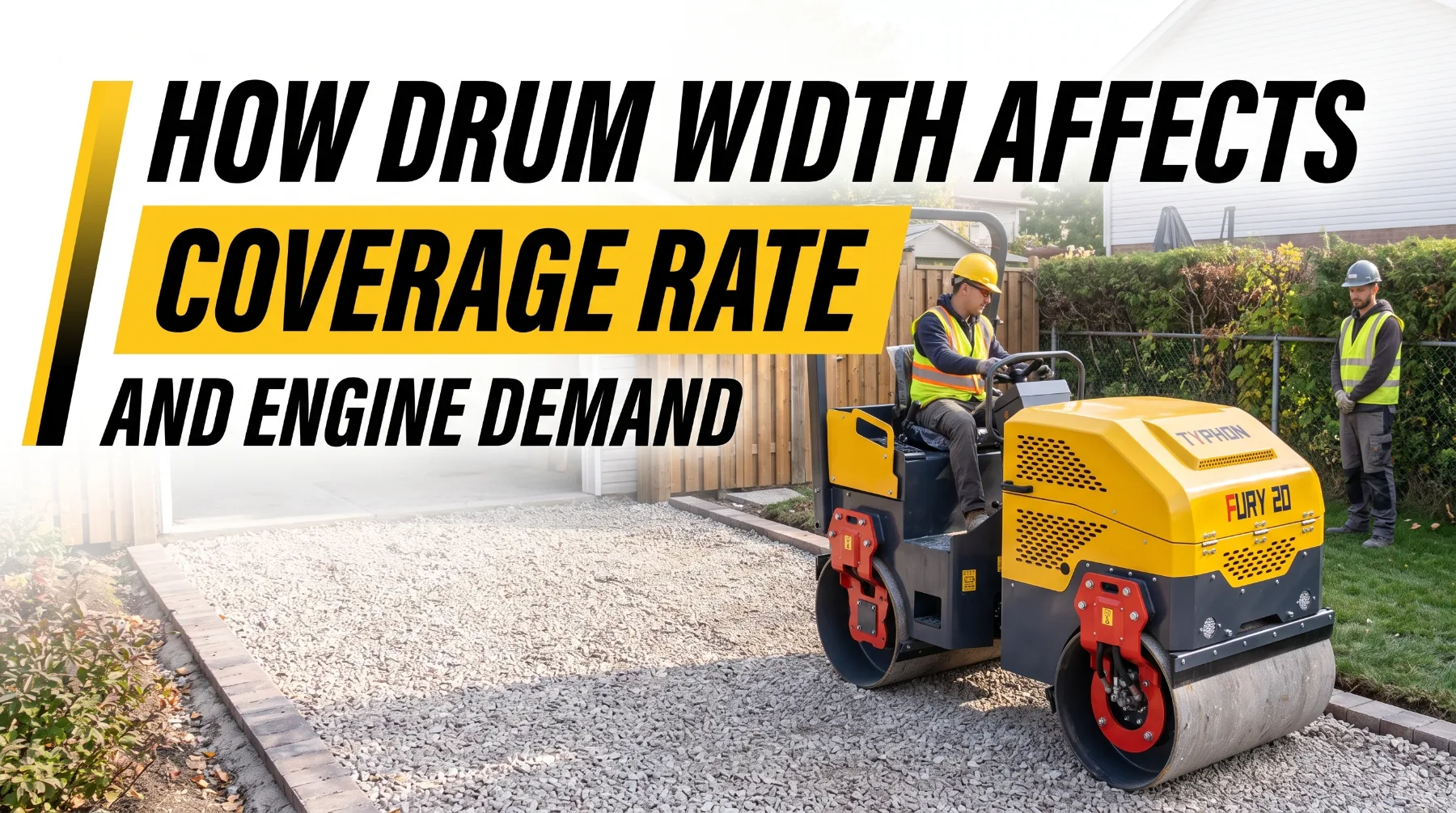
A paving foreman stands at the edge of a fresh asphalt mat on a warm afternoon, watching the clock as much as the roller. The mix is cooling faster than he would like, and every minute the roller spends crossing the surface is a minute the material loses workable heat. His operator runs a machine with a narrow drum, tracking back and forth in tight, overlapping lanes that eat up the shift. The foreman knows a wider drum would sweep more of the mat with each pass, finishing the compaction before the heat slips away, yet he also remembers the wider machine his neighbor complained about, the one that seemed to drink fuel and labor on grades. That tension, between covering more ground and asking more of the engine, is exactly what drum width decides. Understanding how the two connect is what keeps a compaction job fast, fuel-smart, and finished right.
Drum width shapes how much ground a road roller covers with each pass and how hard its engine must work to move, so the two figures pull against each other in ways many buyers overlook. Knowing how coverage is measured, how a wider drum changes the pass count, and how that width reaches the engine helps you match the machine to the work with confidence.
Why the Drum’s Width Sets the Pace of the Work
Coverage runs straight through the drum, so its width governs how much surface the roller touches on every trip across the mat. The drum is the working face of the machine, pressing down on the material to compact it, and a wider drum lays that pressure across a broader strip with each pass. The width you see on the front of the roller quietly sets how quickly the whole job can move.
Productivity ties directly to that width, because a machine that covers more ground per pass finishes a given area in less time. Fewer trips back and forth mean fewer turns, less overlap, and a shorter path to the compaction the job requires, and on time-sensitive work like hot asphalt, that speed protects the material itself. A wider drum turns a race against cooling into a manageable pace.
Balance is what keeps that speed worth having, since a drum too wide for the machine or the site trades its coverage advantage for other troubles. The right width matches the roller’s power and the job’s layout, letting the machine sweep efficiently without straining or fighting tight corners. Key takeaway: the drum’s width sets how much surface the roller compacts per pass, so it directly shapes the pace and productivity of the whole compaction job.
Reading How Coverage Rate Is Calculated
Coverage rate describes how much area a roller can compact in a given span of time, and the concept anchors every other point that follows. The figure combines the working width of the drum with the speed the machine travels, so a roller that lays a wider strip while moving at a steady pace covers more ground each hour. Engineers usually express this rate in square feet or square meters per hour.
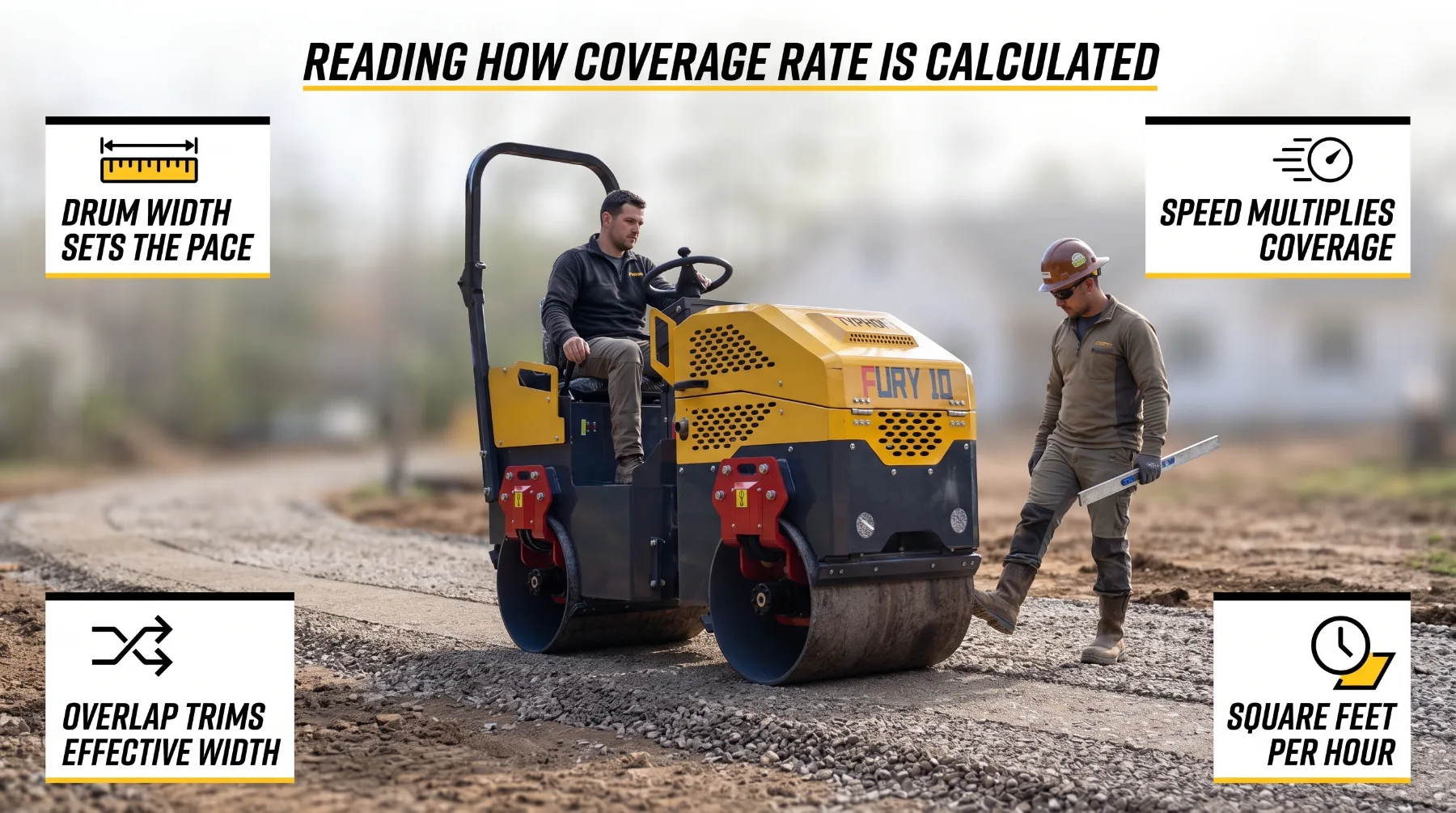
Effective width sits at the heart of the calculation, and it runs a little narrower than the drum’s full measurement. Because each pass must overlap the one before to avoid leaving an uncompacted seam, the width that actually counts toward coverage is the drum width minus that overlap, so a wider drum still gains ground even after the overlap is subtracted. Reading the effective width rather than the raw drum size keeps a coverage estimate honest.
Passes complete the picture, since compaction rarely finishes in a single trip over the surface. Most material needs several passes to reach its target density, so the true coverage rate divides the raw area figure by the number of passes the job requires, and a job needing four passes covers a quarter of the ground per hour that a single pass would suggest. Key takeaway: coverage rate combines effective drum width, travel speed, and the number of passes required, so reading all three together reveals how much area a roller truly compacts per hour.
Seeing How Wider Drums Cut the Passes Per Area
Lanes are where a wider drum proves its worth most plainly, because compacting a surface means covering it in strips, and wider strips mean fewer of them. A roller must work its way across the full width of a mat or a lift lane by lane, so a drum that lays a broader strip divides the same area into fewer passes from edge to edge. The math is simple, and it favors the wider machine on open ground.
Overlap savings compound the advantage in a way that is easy to miss. Every lane must overlap its neighbor to seal the seam, and a narrow drum forced to make many lanes repeats that overlap many times, wasting effort on ground already compacted, while a wider drum makes fewer lanes and repeats the overlap fewer times. Less repeated overlap means less wasted travel across the whole surface.
Turns and repositioning shrink alongside the lane count, which matters more than buyers expect. Each lane ends in a turn or a reversal that costs time and adds wear, so cutting the number of lanes cuts the number of those transitions, keeping the machine rolling productively rather than maneuvering. Key takeaway: a wider drum divides a surface into fewer lanes, cutting the passes, the repeated overlap, and the turns per area, so the roller finishes open ground noticeably faster.
Understanding How Drum Width Draws on the Engine and Drive System
Power enters the picture the moment you consider what it takes to move and drive a wider drum. A broader drum carries more mass and presses more surface against the ground, so propelling it and turning it demands more force from the drive motors and the engine behind them. The coverage advantage of a wide drum comes with a matching draw on the machine’s power.
Vibration compounds that demand on the machines that use it, since most rollers compact through a vibratory system as well as sheer weight. A wider drum houses a larger eccentric mechanism to generate vibration across its full span, and driving that heavier vibration system pulls real power from the engine on top of the effort of propulsion. The engine must feed both the travel and the vibration at once, and a wider drum raises the bill for each.
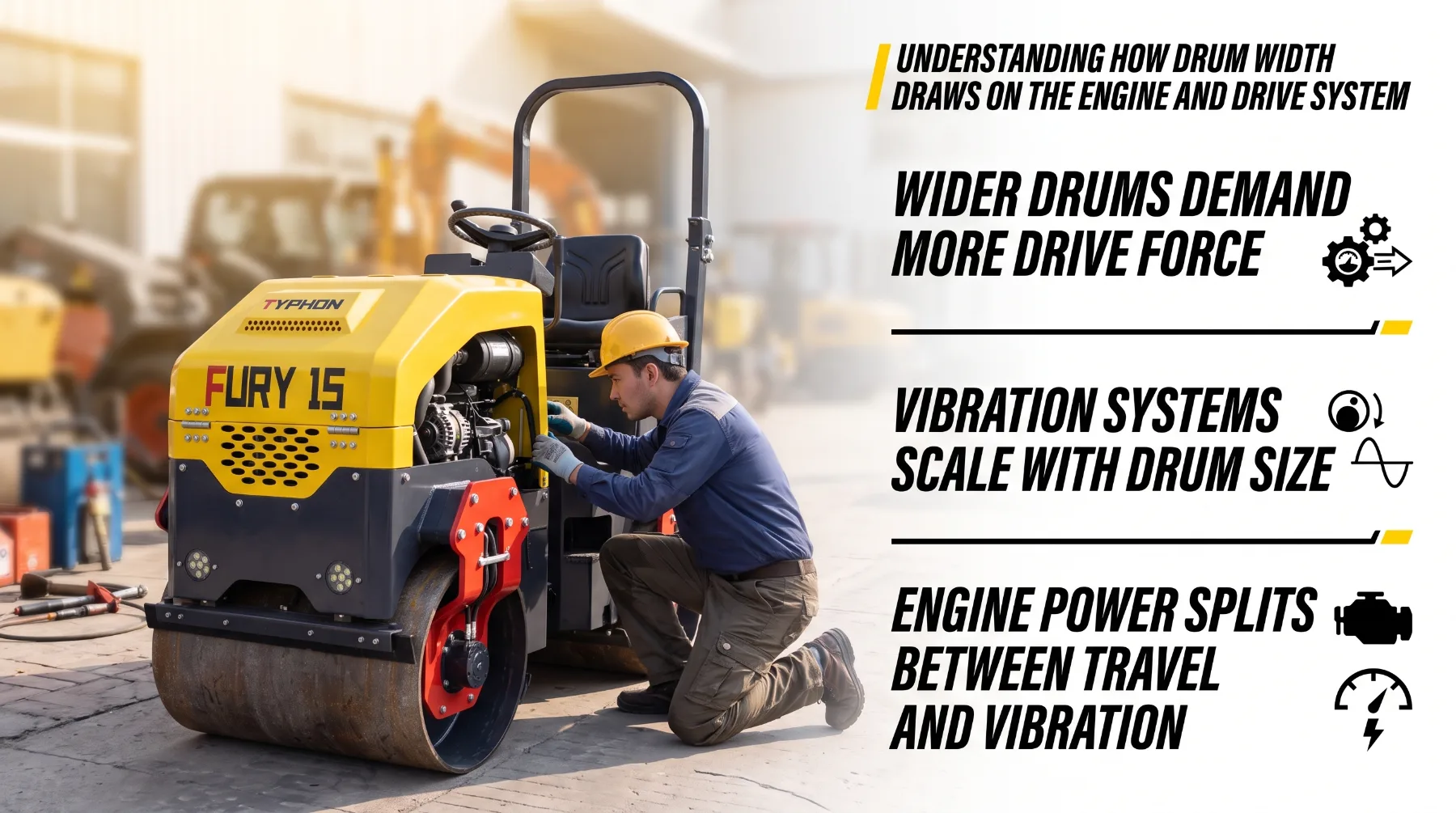
Reserve is what separates a roller that carries its width comfortably from one that strains under it. A machine whose engine and drive system are built around a wide drum handles the load without faltering, while a narrow-machine chassis pushed to a wider drum would labor on grades and in soft ground. Key takeaway: a wider drum raises engine and drive system demand through greater propulsion effort and heavier vibration, so the machine needs power built to match the width it carries.
Weighing Site and Material Before You Choose a Width
Layout should lead every decision about drum width, because the shape and openness of the work decides whether a wide drum can use its advantage. Broad, open surfaces like highway lanes, large lots, and long embankments let a wide drum sweep efficiently, while tight streets, trench backfill, and work around obstacles reward a narrow drum that fits where a wide one cannot. Naming the space the roller must work guides the width before any other factor.
Material and lift thickness weigh into the choice alongside the layout, since what the roller compacts shapes how much drum the job can support. Deep lifts of dense material demand real compactive force concentrated enough to reach full depth, and spreading a machine’s weight across an overly wide drum can thin that force, so the width and the material must be judged together. Matching the drum to the compaction the material needs keeps the density on target.
Access and transport round out the assessment, because a drum that cannot reach the work or fit the trailer helps no one. Wide drums broaden the whole machine, which can complicate hauling and block passage into confined sites, so measuring the tightest access and confirming legal transport width guards against a machine that struggles to arrive. Key takeaway: reading your site layout, your material and lift depth, and your access and transport limits together points you toward the drum width the job can truly use.
Matching Drum Width to the Job at Hand
Selection pulls every earlier factor together, because the surest path to the right drum width is weighing your real work against what each option delivers. Begin by naming the surfaces you compact most often, the tightest space the machine must clear, and the material and lift depth the job demands, then read those answers against the coverage a width offers and the power the machine carries. Choosing for the work you actually do keeps the roller suited to the job rather than to a single extreme.
Coverage against maneuverability is the trade every buyer must settle, since the two rarely favor the same drum. A wide drum wins on open ground through fewer passes and faster coverage, while a narrow drum wins in tight and confined work through the access and control a broad machine cannot match. Safety features should also follow the jobsite, with clear operator visibility, stable handling, reliable braking, and controlled movement helping the machine stay predictable in both open and confined areas. The balance ultimately tips toward whichever drum size and safety setup your typical job rewards, so weigh how often you face open versus confined work and the operating conditions you encounter.
Mixed schedules often point toward a considered plan rather than a single compromise machine. An operation handling both wide-open paving and tight urban patchwork may favor a mid-width roller that manages both reasonably, pair machines suited to each task, or rent the right drum for the exception, so the fleet fits the full range of work. Key takeaway: match drum width to your surfaces, access, and material by weighing coverage against maneuverability, and plan for mixed work so the roller compacts efficiently where it earns its keep.
Conclusion
Drum width shapes both how fast a road roller covers ground and how hard its engine must work to do it, and the full picture holds once you follow each piece in turn. Start by recognizing why the drum’s width sets the pace of the work, laying compactive force across a broader strip with every pass. Understand how coverage rate combines effective width, travel speed, and the passes a job requires, then see how a wider drum cuts the lanes, the repeated overlap, and the turns per area. Weigh how that same width draws harder on the engine and drive system through greater propulsion and heavier vibration, and read your site layout, material, and access before you decide. Finish by matching the drum width to your surfaces, your maneuverability needs, and the material you compact. This approach helps you run a roller that finishes the work quickly without straining under a width it was never built to carry. Before your next project or purchase, name your typical surface, measure your tightest access, and confirm the machine’s power suits the drum so it performs from the first pass. When you’re ready to put a dependable road roller with the right drum width to work, or need help matching coverage to your projects, reach out to a trusted equipment specialist who can match reliable equipment to the results your work depends on.
Frequently Asked Questions
Does a wider drum always compact a job faster?
Usually on open ground, because it covers more area per pass. On tight sites, a narrower drum may work faster because it is easier to maneuver. Match drum width to the site and machine power.
How is a road roller’s coverage rate actually calculated?
Coverage depends on drum width, travel speed, and required passes. Account for overlap between passes, then divide the effective coverage by the number of passes needed for proper compaction.
Does a wider drum use more fuel?
It can. A wider drum may require more power to move, steer, and vibrate, increasing fuel use. However, fewer passes can offset that cost on large, open areas.