


Why Is My Scissor Lift Battery Dying Quickly?
A maintenance crew rolls an electric scissor lift onto the warehouse floor for a full day of overhead work, fresh off an overnight charge. By mid-morning the platform slows, the low-battery warning flashes, and the machine quits with half the ceiling lights still untouched. The crew loses an hour waiting on a partial charge that barely covers lunch, then the lift dies again before the shift ends. Everyone blames the machine, but the battery was never the problem on its own. The way it was charged, stored, and maintained quietly drained its life long before that morning. The lift was capable. The battery care behind it wasn’t.
A scissor lift battery that dies too fast rarely fails for one dramatic reason. It’s usually a stack of small habits and overlooked conditions that shorten runtime and cut the pack’s life short. The good news is that most of those causes are preventable once you know what to look for. This post walks you through why your battery drains quickly and what to do about it: the charging habits that quietly kill capacity, the effects of age and cell damage, the hidden drains and temperature swings that steal runtime, and the maintenance and replacement decisions that keep you working. Sort these out, and your lift holds a charge the way it should.
How Charging Habits Drain Battery Life
Most premature battery trouble starts at the charger, not inside the machine. The way you charge a scissor lift battery has more effect on its life than almost anything else. Fix your charging routine first, because it’s the cheapest and fastest way to recover lost runtime.
Skipping Full Charge Cycles
Deep-cycle lift batteries want a complete charge every time, not a quick top-off between tasks. Interrupting a charge or unplugging early leaves the pack partially full, and doing that repeatedly builds up sulfation that permanently cuts capacity. Over weeks, a battery treated this way holds less and less of a shift.
Let the charger finish its full cycle whenever you can. Understanding your machine’s scissor lift battery charge cycle and respecting it end to end keeps the pack healthy and full. A battery charged completely and consistently delivers far more runtime than one nursed with partial top-offs.
Overcharging and Undercharging
Both extremes hurt. Leaving a battery on a charger that isn’t designed to shut off can overcharge the pack, boiling off water and cooking the cells. Letting it sit deeply discharged for long stretches does the opposite kind of damage, hardening the plates and slashing capacity.
Use the correct charger matched to your battery and let it manage the cycle. A smart charger that tapers and stops protects the pack far better than a basic unit left running. Charge promptly after use rather than letting a drained battery sit, since a discharged pack degrades fastest when it’s left empty.
Charging on the Wrong Schedule
Timing matters as much as method. Charging in short bursts throughout the day instead of one full overnight cycle stresses the battery and rarely restores a true full charge. That habit leaves you starting shifts with less than you think you have.
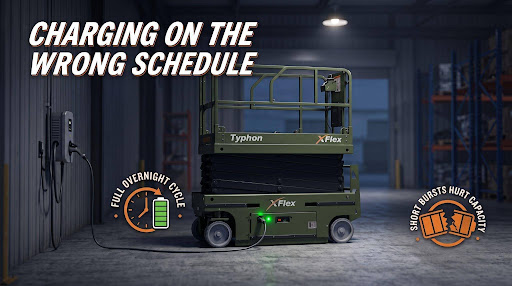
Build a predictable routine around your workload. Matching the charge schedule to your electric lift runtime per shift means the pack fully recovers between shifts and starts each day at capacity.
Takeaway:: incomplete cycles, over- or undercharging, and a scattered charging schedule are the fastest ways to drain battery life, so correct your charging routine before you suspect the battery itself.
When Age and Cell Damage Are the Cause
Sometimes the charging is fine and the battery is simply worn out or damaged inside. Every battery has a finite life, and physical cell problems accelerate the end. Recognizing these signs keeps you from chasing fixes on a pack that’s beyond saving.
Normal Battery Aging
Batteries lose capacity gradually as they age, so a pack that once ran a full shift will run shorter as the years pass. This decline is normal and unavoidable, driven by the total number of charge cycles the battery has been through rather than the calendar alone.
Track the pack’s history if you can. A battery several years old with heavy daily use has simply reached the back half of its life, and no amount of careful charging fully reverses that. Expect steadily shorter runtime as a battery approaches the end of its rated cycle count.
Sulfation and Plate Damage
Inside a lead-acid battery, sulfation builds up when the pack sits discharged or is chronically undercharged. Those hardened crystals coat the plates and block the chemical reaction that stores energy, cutting capacity sharply. Left unchecked, sulfation becomes permanent and unrecoverable.
Physical plate damage from vibration, deep discharges, or age has the same effect. Cells that can no longer hold a charge drag down the whole pack, so runtime drops even after a full charge. When a battery charges fully yet dies quickly, internal damage is often the reason.
A Single Failing Cell
A battery pack is only as strong as its weakest cell. One dead or failing cell can pull down the voltage of the entire pack, causing rapid drain even when the rest of the cells are healthy. This is a common and easily missed cause of sudden runtime loss.
Testing individual cell voltages reveals the culprit. A load test or a cell-by-cell voltage check shows whether one cell has failed while the others remain sound.
Takeaway:: normal aging, sulfation and plate damage, and a single failing cell all cut runtime from inside the battery, so when careful charging doesn’t help, test the pack to see whether age or damage is the real cause.
Hidden Drains and Temperature Effects
Even a healthy, well-charged battery can seem to die fast when something outside the pack is working against it. Parasitic drains and temperature extremes quietly steal runtime in ways that are easy to overlook. Rule these out before condemning the battery.
Parasitic and Phantom Drains
A scissor lift can draw power even when it’s parked and switched off. A control system left energized, a stuck relay, or a fault in the wiring can slowly pull current overnight, so the machine starts the day already partway drained. This phantom draw mimics a bad battery.
Check for drains when the machine sits idle. Confirming there’s no parasitic pull while the lift is off helps you separate a wiring problem from a battery problem. If a fully charged pack loses noticeable charge overnight with the machine idle, a hidden drain is the likely thief rather than the battery.
Cold Weather and Heat
Temperature has a strong effect on battery performance. Cold weather slows the chemical reaction inside the pack, so a battery delivers noticeably less runtime on a cold morning than it does in mild conditions. The capacity returns as things warm up, but the shift feels shorter in the meantime.
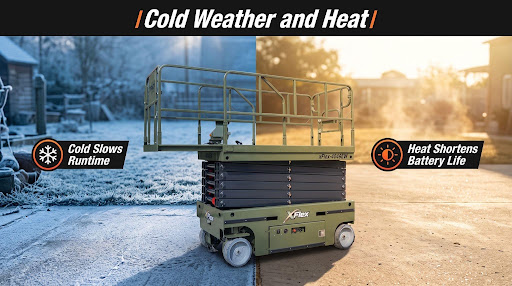
Heat causes lasting harm instead of temporary loss. High temperatures accelerate the chemical wear inside a battery, shortening its overall life and evaporating water from the cells faster. Storing and charging the pack in a controlled, moderate environment protects both daily runtime and long-term capacity.
High Load and Overwork
How hard you run the lift affects how fast it drains. Heavy loads, constant lifting, long travel across a site, and steep or repeated cycles all pull more current, so the battery empties faster than it would on lighter work. That’s expected rather than a fault.
Match your workload to a realistic runtime estimate. If the machine consistently drains before the work is done, you may need a spare charged pack or a mid-shift charging break rather than a new battery.
Takeaway:: parasitic drains, cold and heat, and heavy workloads all shorten runtime without a failing battery, so check these external factors before assuming the pack is bad.
Maintenance, Solutions, and When to Replace
Once you know the cause, the fix is usually straightforward, and steady maintenance prevents most problems from returning. Good care extends a battery’s life significantly, but every pack eventually reaches the point of replacement. Here’s how to maintain, troubleshoot, and know when it’s time.
Keep Up With Battery Maintenance
Flooded lead-acid batteries need water, and low electrolyte is a leading cause of lost capacity and early failure. Following a proper battery watering schedule with distilled water keeps the plates covered and the cells working, but never overfill, and always water after charging rather than before.
Keep the connections clean, too. Corroded or loose terminals add resistance that robs runtime and can mimic a dying battery. Cleaning the terminals, tightening the connections, and keeping the top of the battery clean and dry are simple habits that protect capacity shift after shift.
Troubleshoot Before You Replace
Work through the likely causes in order before spending on a new pack. Confirm the charger is working and completing full cycles, check the water levels and connections, test for parasitic drains, and rule out temperature or workload as the real reason. Many quick-drain problems trace back to one of these rather than a failed battery.
Test the battery directly when the basics check out. A load test and a cell-by-cell voltage check tell you whether the pack still holds capacity or whether a cell has failed. This kind of honest diagnosis saves you from replacing a battery that only needed water, a clean terminal, or a proper charge.
Know When to Replace the Battery
Some signs point clearly to replacement. A pack that charges fully but still dies quickly, one with a failed cell, heavy sulfation, or visible damage, or a battery well past its rated cycle life is telling you its working days are over. Nursing it along only costs you downtime.
Weigh the cost of continued downtime against a new pack. When a battery repeatedly strands a crew mid-shift, the lost hours quickly outweigh the price of replacing it. Choose a quality battery matched to your machine and commit to the charging and maintenance habits above, so the new pack lasts its full life.
Takeaway:: steady maintenance and orderly troubleshooting solve most quick-drain problems, but when a battery is aged, damaged, or repeatedly failing, replacing it is the reliable and cost-effective choice.
Frequently Asked Questions
Why does my scissor lift battery die so fast even after a full charge?
When a battery charges fully but still drains quickly, the problem is usually inside the pack or in the load on it. Sulfation, plate damage, or a single failing cell can leave a battery reading full while holding little real capacity. A parasitic drain, cold weather, or a heavy workload can also empty a healthy pack faster than expected. Start with a load test and a cell-by-cell voltage check to see whether the battery itself has lost capacity or whether an outside factor is to blame.
Can cold weather cause my scissor lift battery to drain quickly?
Yes. Cold slows the chemical reaction inside the battery, so it delivers less runtime on a cold morning than in mild conditions. This loss is usually temporary and returns as the battery warms. Heat is more damaging, since high temperatures speed up internal wear and evaporate water from the cells, shortening the pack’s overall life. Store and charge the battery in a moderate, controlled space to protect both daily runtime and long-term capacity.
How can I make my scissor lift battery last longer?
Build a few steady habits. Charge fully after every use with the correct charger, keep flooded batteries watered with distilled water on a regular schedule, and clean and tighten the terminals to cut resistance. Avoid deep discharges and long idle periods at empty, store and charge the pack in moderate temperatures, and match your workload to a realistic runtime. Consistent care like this often adds years to a battery’s working life.
Conclusion
A scissor lift battery that dies too quickly is almost always sending a signal worth reading rather than simply wearing out at random, and the fastest way to fix it is to work through the causes in order, since improper charging habits like interrupted cycles, over- or undercharging, and scattered top-offs quietly drain capacity long before a battery looks bad, while normal aging, sulfation, plate damage, and a single failing cell cut runtime from the inside, and hidden factors like parasitic drains, cold mornings, high heat, and heavy workloads can strand a perfectly healthy pack; so before you condemn the battery, correct your charging routine, keep the water and terminals maintained, rule out drains and temperature, and test the pack honestly with a load and cell-voltage check, because most quick-drain problems trace back to habits and conditions you can fix cheaply, and only when a battery charges full yet still fails, shows a dead cell or heavy sulfation, or has clearly outlived its rated cycles does replacement become the smart, cost-effective call that ends the downtime for good, and when you’re ready to match a dependable battery or the right charging and maintenance support to your machine, reach out to a trusted equipment specialist who can pair reliable equipment with the uptime your work depends on.