


The ground underneath every beautiful building and perfect highway is what holds them up. If you build on loose, uncompacted soil, your whole project will eventually shift, crack, and fail. Professional contractors know that the best way to protect any big infrastructure project is to make sure that the ground is well-compacted. To make a surface that lasts a long time, you need a lot of knowledge and very reliable machines.
To get the most structural stability, you need to get rid of the hidden air pockets and extra moisture that are trapped deep in the ground. You can’t just grade the dirt and expect it to hold thousands of tons of concrete or traffic on the highway all the time. You have to use a lot of pressure and very precise mechanical force to lock the soil particles together in a systematic way.
This comprehensive guide explores how road rollers guarantee structural durability from the ground up. We will examine exactly why compaction remains absolutely critical for your business reputation and project longevity. You will discover how mastering drum vibration, machine weight, and precise compaction passes leads directly to superior results. Finally, we will outline how proper compaction prevents catastrophic settlement and saves you massive amounts of money in future repairs.
The Critical Importance of Proper Compaction
Natural soil consists of solid particles, water, and empty pockets of air. When heavy loads press down on uncompacted ground, the air voids collapse and the water shifts, causing the soil to sink unevenly. This unequal settling creates massive stress fractures in the concrete foundations and asphalt surfaces resting above.
Water infiltration presents an even greater threat to your finished projects. Uncompacted soil absorbs rainwater like a massive sponge, expanding significantly when wet. In colder climates, this trapped water freezes and expands further, violently pushing the pavement upward. When the ice eventually melts, the ground collapses, leaving massive potholes and deeply fractured roads behind.
Delivering superior road roller compaction quality eliminates these hidden dangers entirely. By forcing the soil particles tightly together, you completely destroy the empty air pockets and seal the ground against water penetration. This rigorous mechanical process transforms loose, unreliable dirt into a dense, impenetrable base that can easily support immense structural weight.
How Rollers Dramatically Improve Durability
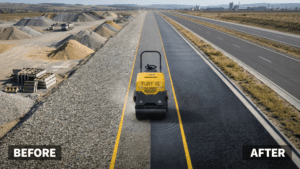
Standard earthmoving equipment can push dirt around, but it cannot deliver the deep consolidation required for true structural durability. Road rollers utilize specialized engineering to manipulate the physical properties of the materials they compress. They rely on a combination of raw crushing power and dynamic energy to force particles into their tightest possible formation.
When a heavy roller passes over a layer of loose aggregate, the mechanical force breaks down the friction between the individual stones. The rocks slide past one another, filling in the microscopic gaps and interlocking tightly together. This interlocking action creates a highly rigid, load-bearing matrix that actively resists shifting or bending under extreme pressure.
Different materials require completely different compaction strategies to achieve this durable state. Cohesive soils, like heavy clay, require specialized padfoot rollers that knead the dirt to squeeze out trapped moisture. Conversely, granular soils and hot asphalt require smooth drum rollers to create a perfectly flat, tightly sealed finish. Understanding how to match your machinery to your material guarantees exceptional, long-lasting project results.
Key Systems Behind Compaction Power
Modern road rollers are highly sophisticated pieces of engineering. They do not rely on sheer mass alone to compress the ground beneath them. Manufacturers design these machines with complex internal systems that work in perfect harmony to maximize the depth and quality of the compaction.
Harnessing Drum Vibration
Vibration serves as the most powerful tool in your compaction arsenal. Inside the heavy steel drum, rotating eccentric weights spin at incredibly high speeds. This rapid spinning generates a massive dynamic force that violently shakes the ground directly beneath the machine.
This intense vibration sends shockwaves deep into the earth, actively breaking the friction between the soil particles. While the particles hover in this momentarily suspended state, the heavy weight of the drum forces them tightly together. By adjusting the amplitude and frequency of these vibrations, your operators can dial in the exact amount of force required for the specific material they are rolling.
The Role of Machine Weight
While vibration delivers deep dynamic force, the physical static weight of the machine provides the necessary crushing power. Machine weight dictates exactly how much downward pressure the roller applies to the surface of the material. You must select a machine that carries enough mass to compress your specific lift thickness effectively.
Heavy soil compaction equipment easily crushes large clumps of clay and dense aggregate into a tight, uniform layer. However, using a machine that is far too heavy for the task can actually damage the material. Excessive weight crushes the individual aggregate stones into dust, destroying the interlocking structure and severely weakening the final base.
Executing Perfect Compaction Passes
Achieving the required soil density never happens on the very first try. Your operators must drive the roller back and forth over the material in a highly structured, systematic pattern. Each trip across the material is known as a compaction pass, and managing these passes correctly dictates the ultimate success of your project.
Operators must carefully overlap their previous passes to ensure they do not leave any loose, uncompacted strips behind. You must also strictly monitor the total number of passes you execute on a single stretch of ground. Too few passes leave the ground unstable, while too many passes cause over-compaction, which actually fractures the material and degrades its structural integrity.
Core Applications for Professional Contractors
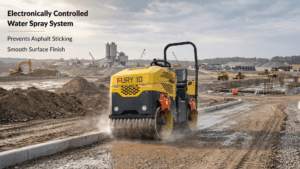
Heavy compaction equipment serves a vital role across vastly different construction disciplines. Whether you are building massive commercial warehouses or paving miles of interstate highway, rollers ensure your work stands the test of time. Let us examine how professional contractors utilize these powerful machines in their daily operations.
Establishing Solid Structural Foundations
Before your crew pours a single yard of concrete, they must prepare the underlying soil perfectly. Commercial building pads and residential foundations require absolute stability to prevent the massive concrete slabs from cracking. Contractors rely heavily on premium soil compaction equipment to establish this critical base layer.
Operators typically lay down the dirt in manageable, shallow layers known as lifts. They compact each lift thoroughly before the earthmovers bring in the next layer of soil. This meticulous, layer-by-layer approach guarantees that the entire depth of the foundation achieves the exact density requirements mandated by strict municipal building codes.
Constructing Flawless Highways
Paving a smooth, durable road requires incredibly precise temperature management and rapid, flawless compaction. As the paving machine lays down the hot mix asphalt, a highly coordinated team of rollers follows immediately behind it. They must compress the material before it cools and hardens completely.
The primary asphalt compaction machine utilizes heavy vibration to achieve the initial density and force the liquid asphalt binder into the aggregate voids. Following the primary breakdown roller, a secondary pneumatic tire roller kneads the surface to seal any remaining microscopic cracks. Finally, a static smooth drum roller irons out any tire marks, leaving behind a perfectly flat, safe driving surface for the public.
The Long-Term Financial Benefits
Investing time and resources into proper compaction yields a massive return on investment for your contracting business. When you establish a flawless base, you completely eliminate the risk of structural settlement and massive pavement failures. Your projects remain perfectly intact, looking highly professional and functioning exactly as designed for decades.
Preventing cracks and potholes saves your clients thousands of dollars in emergency maintenance and highly expensive structural repairs. When your work consistently outlasts the competition, you build an impenetrable reputation for quality and reliability. This strong reputation naturally generates highly lucrative referrals and allows you to secure the most profitable contracts in your region.
Furthermore, executing your compaction correctly the very first time protects your internal profit margins. Returning to a finished jobsite to tear out cracked concrete and re-compact the failing soil completely destroys your bottom line. Doing the job right with the correct machinery ensures your crew stays moving forward toward the next profitable project.
Deliver Exceptional Results Every Time
Mastering the science of material compaction sets your contracting business apart as a true industry authority. You now understand exactly how road rollers guarantee long-lasting durability by locking particles together and eliminating dangerous air voids. By leveraging advanced drum vibration, appropriate machine weight, and precise compaction passes, you secure the structural integrity of your most demanding projects.
Take the time to evaluate your current compaction strategies and the specific machinery in your fleet. Ensure your operators fully understand the critical importance of their specific rolling patterns and vibration settings. To further protect your projects from failure, watch for our upcoming guide on common compaction mistakes and how to avoid them with road rollers. When you commit to delivering a flawless, unyielding foundation, you build a legacy of undeniable quality and absolute customer trust.