


Hydraulic cylinders are the muscles of your mini excavator. Every boom raise, arm curl, and bucket scoop depends on these components working smoothly under pressure. When they perform well, the machine feels powerful and responsive. When they start to fail, you notice it immediately: slow movements, loss of lifting power, and oil weeping down the rods. Because cylinders sit out in the open, exposed to mud, rock, dust, and weather, they take a constant beating that other parts of the machine never see. Protecting them from physical impact, contamination, and corrosion is one of the smartest investments you can make in your equipment. A neglected cylinder can lead to seal blowouts, scored rods, and full rebuilds that pull the machine off the job for days. The good news is that protecting these vital parts does not require special tools or deep technical knowledge. It comes down to a handful of consistent habits built into your daily routine. The five practices below cover everything from quick visual checks to smart operating technique, giving you a practical framework to keep your cylinders healthy and your machine earning its keep for years to come.
1. Daily Visual Inspection for Leaks and Dents
A few minutes of inspection each day can save you from a major repair down the road. Make it a habit to walk around your mini excavator before starting work and look closely at every exposed cylinder rod. These polished chrome surfaces are precision components, and even small flaws can trigger expensive damage if they go unnoticed. Run your eyes along each rod and watch for the warning signs that point to trouble ahead.
During your walkaround, pay close attention to the following:
- Pitting and corrosion on the chrome surface, often appearing as small rust spots or rough patches
- Scratches and gouges that break the smooth finish of the rod
- Minor dents from falling debris or contact with rocks and other obstacles
- Oil film or drips around the cylinder gland, which signal seals beginning to leak
The reason these tiny imperfections matter so much comes down to how a cylinder works. As the rod slides in and out, it passes through tightly fitted seals that keep hydraulic oil where it belongs. Any rough spot on the chrome acts like sandpaper, dragging across those seals thousands of times a day and slowly tearing them apart. What starts as a hairline scratch can quickly become a significant hydraulic leak, a loss of pressure, and eventually a cylinder that no longer holds its position. Catching a dent or a patch of pitting early gives you the chance to address it before it destroys the seals and contaminates the system. A reliable machine starts with an operator who knows its condition intimately, and a daily inspection is the foundation of that knowledge.
2. Proper Cylinder Retraction During Transport and Storage
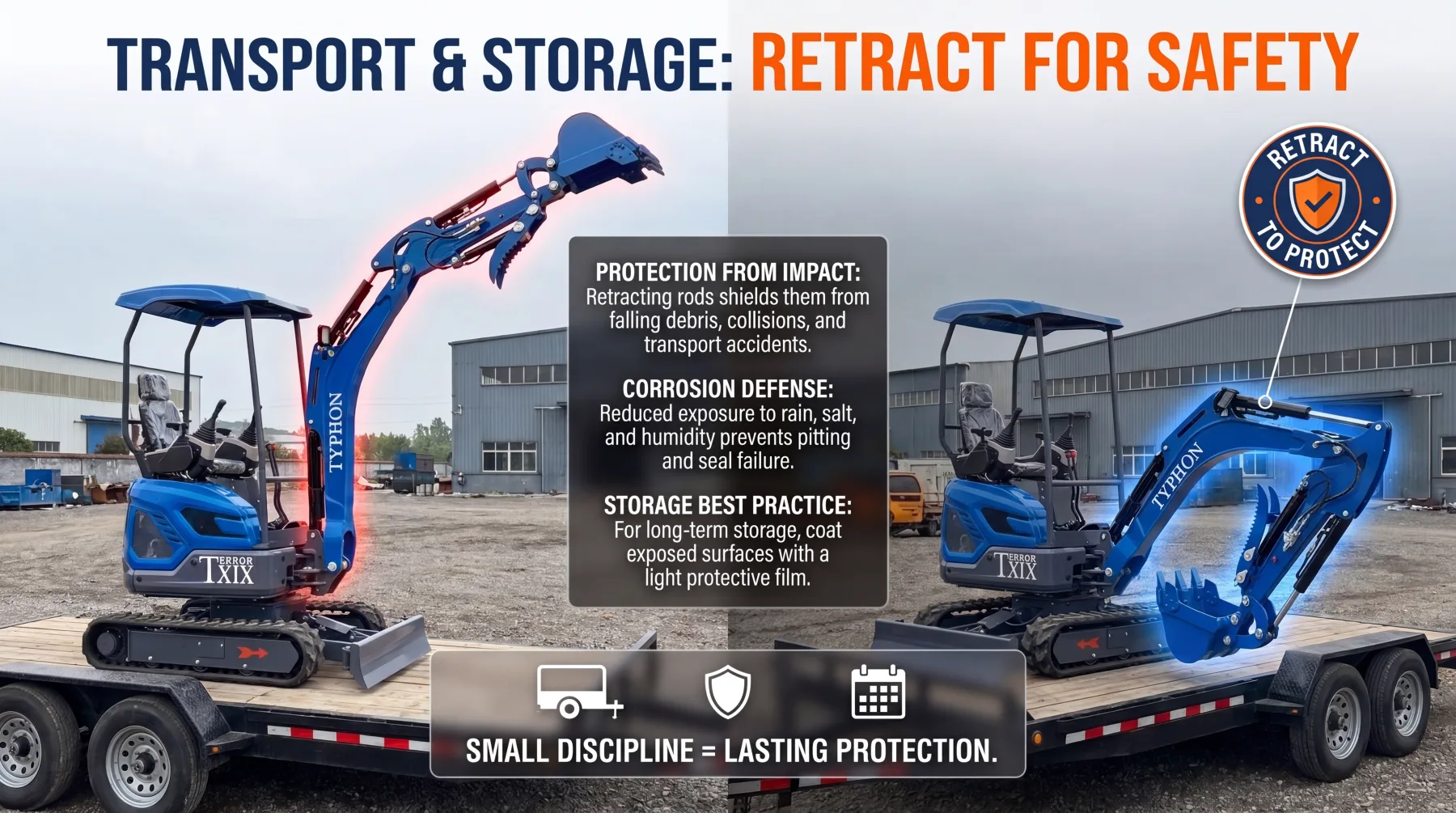
How you park and transport your mini excavator has a direct effect on how long your cylinders last. Whenever the machine sits idle or rides on a trailer, the exposed portion of each rod becomes vulnerable to damage that has nothing to do with the work it was built for. The simplest way to protect those surfaces is to retract the cylinders as far as possible before the machine goes still. Pulling the rods back into their barrels shields the polished chrome inside the cylinder body, where dirt, debris, and impacts cannot reach it.
This matters for several reasons that add up over the life of the machine:
- Falling debris from overhead work, weather, or nearby equipment can dent or scratch an extended rod
- Collisions during transport are far less likely to harm a rod that is tucked safely inside its barrel
- Corrosion exposure drops sharply when less chrome is left open to rain, salt, and humidity
- Unauthorized tampering becomes harder when the working surfaces are not left hanging out in the open
When you load the machine onto a trailer, retracted cylinders also lower the overall profile and reduce the chance of catching on something during loading or unloading. For long-term storage, the same principle applies with even more force. A rod left extended for weeks or months in a damp yard will start to pit and corrode along the exposed section, and that corrosion becomes the seed of future seal failure once the machine returns to service. Coating any rod surface that must remain exposed with a light protective film adds another layer of defense. Taking thirty seconds to position the cylinders correctly before walking away is a small discipline that pays off every time the machine sits unused.
3. Regular Cleaning of Rod Surfaces
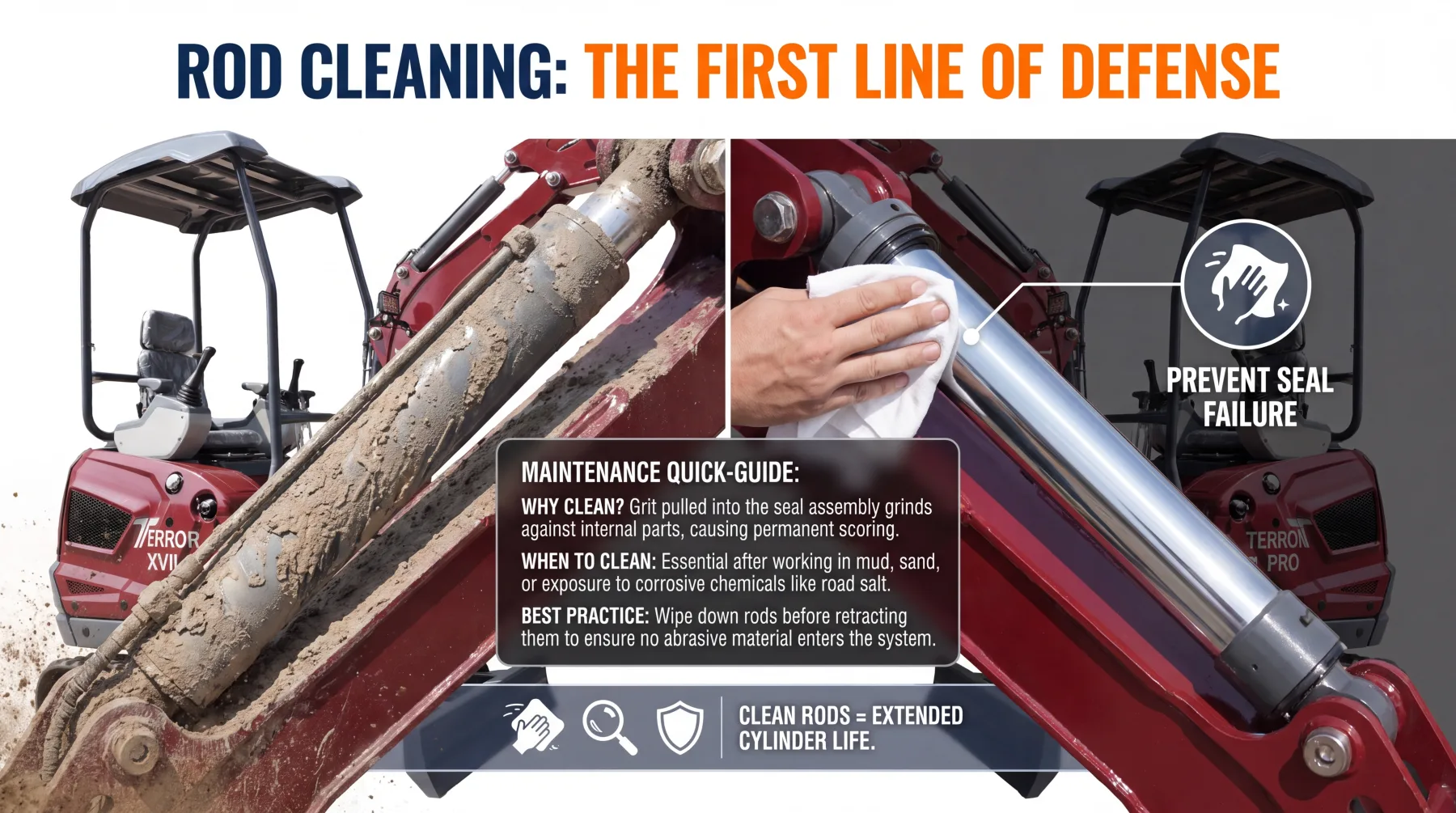
Dirt is the constant enemy of a hydraulic cylinder, and keeping the rods clean is one of the most effective defenses you have. Mini excavators work in mud, dust, sand, and all manner of abrasive material, and that grime cakes onto the exposed rods throughout the day. Before you begin work or move the machine to a new spot, take a moment to wipe down each exposed cylinder rod and clear away the buildup. A clean rag and a careful pass along each rod is all it takes to remove the material that would otherwise cause real harm.
The danger lies in what happens when grit is left in place. As soon as the cylinder retracts, the rod carries any dirt, mud, or corrosive residue directly into the seal assembly. Those abrasive particles then grind against the wiper seals and rod seals from the inside, wearing them down far faster than normal use ever would. Over time, this leads to premature seal failure, internal leaks, and scoring on the rod surface itself. Once a rod is scored, the damage is permanent and usually requires replacing the rod or rebuilding the cylinder.
Pay particular attention to a few situations that make cleaning especially important:
- After working in wet, muddy conditions where material clings stubbornly to the chrome
- When operating around sand, gravel, or other highly abrasive material
- Following exposure to corrosive substances such as road salt, chemicals, or saltwater
- Before retracting a heavily soiled cylinder, since that motion pulls contaminants straight into the seals
Building this quick cleaning step into your routine keeps abrasive material out of the system and protects both the seals and the rods they ride against. It is a small effort that directly extends the working life of every cylinder on the machine.
4. Monitoring Hydraulic Fluid Cleanliness
The condition of your hydraulic fluid determines the health of the entire system, including the cylinders that depend on it. Hydraulic oil does more than transmit power; it lubricates internal components, carries away heat, and protects precision surfaces from wear. When that fluid stays clean, the cylinders glide smoothly and hold their position reliably. When it becomes contaminated, the oil turns into an abrasive slurry that grinds away at the very parts it is meant to protect. Keeping the fluid clean is therefore one of the most important things you can do to preserve your cylinders and the broader hydraulic system.
Contamination usually enters the system in predictable ways, and a disciplined maintenance approach keeps it out. Focus your attention on these practices:
- Stick to strict filter replacement schedules rather than stretching intervals to save time or money
- Use clean filling practices by wiping down fittings, using clean containers, and keeping new oil sealed until the moment it goes in
- Inspect the fluid regularly for cloudiness, a milky appearance, or a burnt smell that points to trouble
- Service filtration more often when the machine works in heavy dust or extreme conditions
The reason this matters so much comes down to physics. Microscopic particles suspended in the oil circulate through the cylinder with every stroke, scrubbing against the piston seals and the polished bore of the barrel. This abrasive action slowly wears down the internal seals, which allows oil to bypass the piston. The result is a cylinder that loses power and begins to drift, settling under load instead of holding firm. Drift is often the first sign that contamination has been quietly damaging the system for some time. By treating fluid cleanliness as a priority rather than an afterthought, you protect not just the cylinders but every pump, valve, and hose in the machine.
5. Avoiding “Bottoming Out” the Cylinders
Smooth, controlled operation protects your cylinders just as much as any maintenance routine. One of the most damaging habits an operator can fall into is repeatedly driving the cylinders to their absolute mechanical limits under load. This practice, often called bottoming out or dead-heading, forces the rod hard against the internal stop at the end of its travel. While the cylinder is built to handle its full range of motion, slamming into that limit again and again under pressure creates forces the component was never meant to absorb on a regular basis.
The harm comes from the pressure spikes that occur at the moment of impact. When a moving cylinder reaches the end of its stroke abruptly while carrying a heavy load, the hydraulic pressure inside surges far above normal operating levels in an instant. Those repeated spikes work their damage in several ways:
- Seal blowouts as the sudden pressure overwhelms the internal seals and forces oil past them
- Bent or bowed rods from the shock of heavy loads driving the rod against its hard stop
- Structural fatigue in the cylinder mounts and pins, which crack over time under repeated stress
- Internal damage to the piston and barrel from the constant hammering at the end of travel
Avoiding this damage is largely a matter of technique. Operates the machine with deliberate, smooth movements and ease off the controls as a cylinder approaches the end of its range, especially when lifting or pushing under full load. Train newer operators to feel where the limits are and to respect them rather than relying on the mechanical stops to halt the motion. This gentler approach keeps pressure within safe bounds, protects the seals and rods, and preserves the structural integrity of the mounts. A machine operated with care simply lasts longer, and treating the cylinders with respect during every cycle is a habit that rewards you with years of dependable service.
Conclusion
Hydraulic cylinders are too important and too expensive to take for granted. As the muscles behind every movement your mini excavator makes, they deserve consistent attention and protection from the harsh conditions they face every day. Daily visual inspections catch small problems before they grow, proper retraction shields the rods during downtime, regular cleaning keeps abrasive grit away from the seals, clean fluid protects the internal components, and smooth operation prevents the pressure spikes that lead to serious failures. None of these practices demand much time or expense, yet together they make the difference between a machine that runs reliably for years and one that spends days in the shop for avoidable repairs. Build these habits into your routine, hold your crew to them on every job, and your cylinders will keep delivering the power and precision your work depends on. Reliable equipment is the result of consistent care, and protecting your hydraulic cylinders is one of the surest ways to keep your mini excavator working hard and earning its keep.