

Spider Mini Excavator Maintenance for Safe Operation
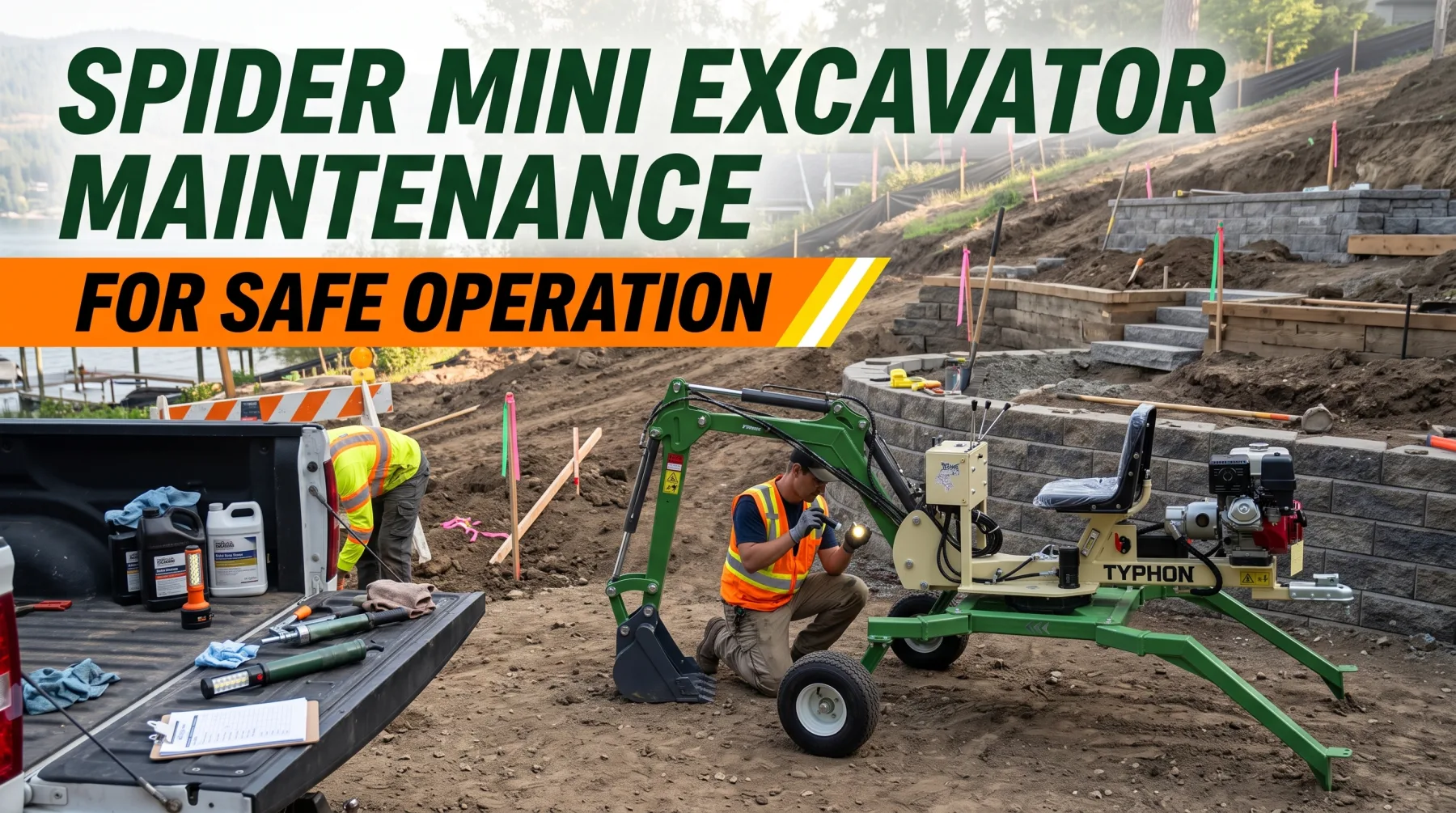
Working on steep slopes and uneven terrain places additional demands on a spider mini excavator’s hydraulic, digging, and stability systems. Small issues such as a leaking cylinder seal, loose attachment hardware, or restricted cooling airflow may seem minor during a routine job, but they can become more serious when the machine is positioned on difficult ground. Regular inspections help identify these problems before they affect safe operation or cause unexpected downtime.
Daily maintenance should include checking hydraulic components, fluid levels, cylinders, pins, retaining hardware, boom and arm connections, and attachments for signs of wear or leakage. Stability components and support legs also need close attention because they carry significant loads when the machine is positioned across slopes or irregular surfaces. Keeping the radiator, cooling package, and other machine areas clean helps maintain proper operation during extended work.
A consistent inspection routine allows operators to address developing problems before they become equipment failures or jobsite hazards. Scheduled servicing should complement daily walkarounds by covering filters, fluids, lubrication points, hydraulic components, and other systems according to the manufacturer’s requirements. Maintaining the machine based on the demands of its working environment helps protect the operator and crew while keeping difficult excavation projects on schedule.
Daily Walkaround Inspection
The daily walkaround is the simplest and most valuable maintenance step for a spider mini excavator. In just a few minutes, it gives you an early read on the machine’s overall condition before it climbs a slope or sets up beside an excavation. Problems found in the yard or at the edge of the site are far easier and safer to fix than problems discovered with the machine perched on a bank.
Start with the machine parked on firm, level ground, the bucket lowered to the ground, the engine off, and the key removed. Walk around the machine in the same order every day so changes stand out. Begin at the boom, arm, and bucket, looking for cracks, bends, and fresh bare-metal marks that can point to impact damage. Move to the support components and look closely at each leg, foot pad, wheel, and track for damage, looseness, and unusual wear. Check underneath the machine for fresh drips of oil, coolant, fuel, or hydraulic fluid.
Hoses deserve close attention during every walkaround. Spider excavators have many hoses running to the boom, arm, and each leg, and these lines flex constantly as the machine adjusts to the terrain. Look for rubbing, abrasion, bulges, and any spot where a hose has shifted out of its clamp. Then check guards, covers, and access panels to confirm they are present and secure. Finish by scanning visible fasteners, retaining pins, and clips, since vibration on rough ground can loosen hardware over time.
Inside the cab, confirm the seat belt, hydraulic lockout lever, controls, horn, lights, and any inclination indicators work as designed. Record what you find in a daily log, even when everything looks normal. A written record helps you notice slow changes, such as a seep that grows over several days, and makes sure reported problems get repaired instead of forgotten.
Key takeaway: A consistent daily walkaround of the boom, arm, bucket, supports, tracks or wheels, hoses, guards, and fasteners reveals damage, looseness, and unusual wear before the machine starts work.
Engine and Fluid Checks
The engine powers every function on a spider mini excavator, from digging and swinging to leg adjustment and travel. Its reliability depends on clean fluids at the correct levels. On a steep or confined site, a machine that overheats or loses hydraulic performance can stall in an awkward position, which makes fluid checks a safety issue as well as a reliability issue.
Check engine oil, coolant, fuel, and hydraulic fluid regularly according to the manufacturer’s requirements, with the machine level and the engine off. Read the engine oil level on the dipstick and look at its condition. Oil that appears milky may indicate coolant contamination, while gritty oil can point to a filtration problem. Check coolant at the reservoir only when the engine is cool, and never open a hot radiator cap. Pressurized coolant can cause serious burns.
Hydraulic fluid needs special care on a spider excavator. Many machines require a specific boom, arm, and leg position for an accurate reading, so follow the procedure in your operator’s manual exactly. Look at the sight glass for discoloration, foam, or particles. Dark or burnt-smelling fluid can signal overheating, and cloudy fluid often means water has entered the system. Keep fuel clean during refueling, wipe the area around the fill cap before opening it, and drain the water separator where equipped.
Watch how quickly levels change. A fluid that drops faster than normal almost always points to a leak, even if you can’t see it yet. Check the air filter restriction indicator daily as well, since dusty excavation work loads filters quickly. Use only the oils, coolants, and hydraulic fluids the manufacturer recommends, and label shop containers clearly so the wrong fluid never goes into the wrong reservoir.
Key takeaway: Check engine oil, coolant, fuel, and hydraulic fluid according to the manufacturer’s requirements, since correct levels and clean fluids support engine cooling, hydraulic performance, and reliable operation during demanding excavation work.
Hydraulic System Inspection
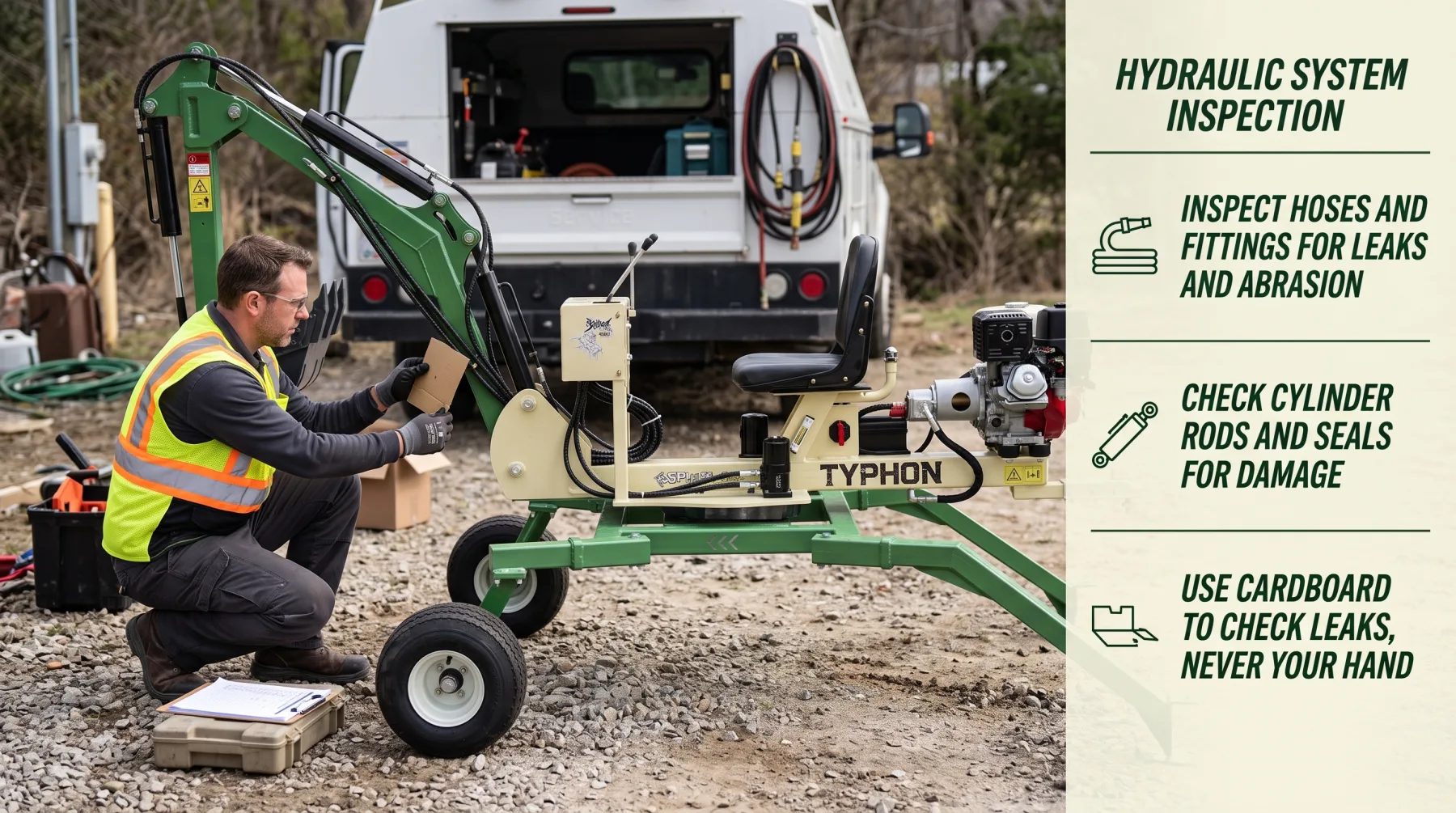
Hydraulics power nearly everything a spider mini excavator does. The boom, arm, bucket, swing, travel, and each support leg depend on pressurized fluid moving through hoses, fittings, and cylinders. A single failed component can affect any of these functions, and on uneven ground, a hydraulic problem in a support leg can directly affect the machine’s stability.
Inspect hydraulic hoses for cracks, abrasion, kinks, bulges, and seepage, paying close attention to areas where hoses bend at joints or pass near sharp edges. Check fittings and connections for dampness, loose nuts, and fresh oil residue that attracts dust. Examine every cylinder, including the boom, arm, bucket, and leg cylinders, for leaking seals and for scoring, nicks, or bends on the chrome rods. A damaged rod can tear seals quickly and lead to drifting or loss of holding force.
Machine behavior tells you a great deal about hydraulic health. A boom that drifts down when the controls are in neutral, a leg that slowly retracts under load, jerky movement, slow response, or unusual pump noise can all point to low fluid, a leak, or internal wear. If you notice any of these signs, lower the bucket to the ground, move the machine to stable ground if it’s safe to do so, and have the system inspected before continuing.
Safety comes first during every hydraulic inspection. Never check for leaks by running your hand along a hose. Pressurized fluid can penetrate skin and cause serious injury that requires immediate medical attention. Use a piece of cardboard or wood instead. Before loosening any fitting, lower all attachments and supports and relieve system pressure according to the manufacturer’s procedure. Replace damaged hoses with parts rated for the system, and add protective sleeves where hoses rub against the frame or each other. Damaged components should always be addressed before the machine returns to work.
Key takeaway: Inspect hydraulic hoses, fittings, cylinders, and connections for leaks, cracks, and abrasion, since a hydraulic problem can affect boom, arm, bucket, swing, or support functions and must be repaired before continued operation.
Boom, Arm, and Attachment Inspection
The boom, arm, and attachment take the full force of every dig. Each pull through compacted soil, each lift of a heavy bucket, and each swing places repeated loads on pins, bushings, cylinders, and connections. Over time, those loads create wear that affects digging accuracy and attachment security.
Start with the pins and bushings at each joint. With the engine off and the bucket on the ground, look for visible movement between the pin and its bore, missing retaining bolts or clips, and fresh metal shavings around the joint. During operation, listen for clunking when the boom or arm changes direction, since excess play often shows up as noise before it becomes visible. Worn pins and bushings let the bucket wander, which makes precise excavation harder and speeds wear on surrounding parts.
Inspect the boom and arm structure for cracks, especially near welds, cylinder mounts, and areas that may have struck rocks, walls, or trees. Check the bucket for worn or missing teeth, a worn cutting edge, and cracks in the side plates. A bucket with worn teeth forces the machine to work harder and puts extra strain on the hydraulic system.
Attachment connections require the same attention. Confirm the quick coupler engages fully and that any secondary lock or safety pin is seated, using the lock indicator where equipped. Look for cracked coupler plates, worn locking components, and elongated pin bores. For hydraulic attachments such as thumbs, augers, or tilt buckets, check couplers for drips, keep connections clean, and relieve pressure before connecting or disconnecting hoses.
Lubrication protects every joint. Grease each fitting according to the manufacturer’s schedule, and more often during heavy digging or in muddy conditions. Wipe fittings clean before greasing so dirt isn’t forced into the joint, and pump grease until fresh grease appears at the edges. Replace any fitting that won’t accept grease.
Key takeaway: Check pins, bushings, cylinders, buckets, and attachment connections for excessive movement, damage, or wear, and keep joints properly greased to maintain accurate digging movement and secure attachment operation.
Stability and Ground Support Components
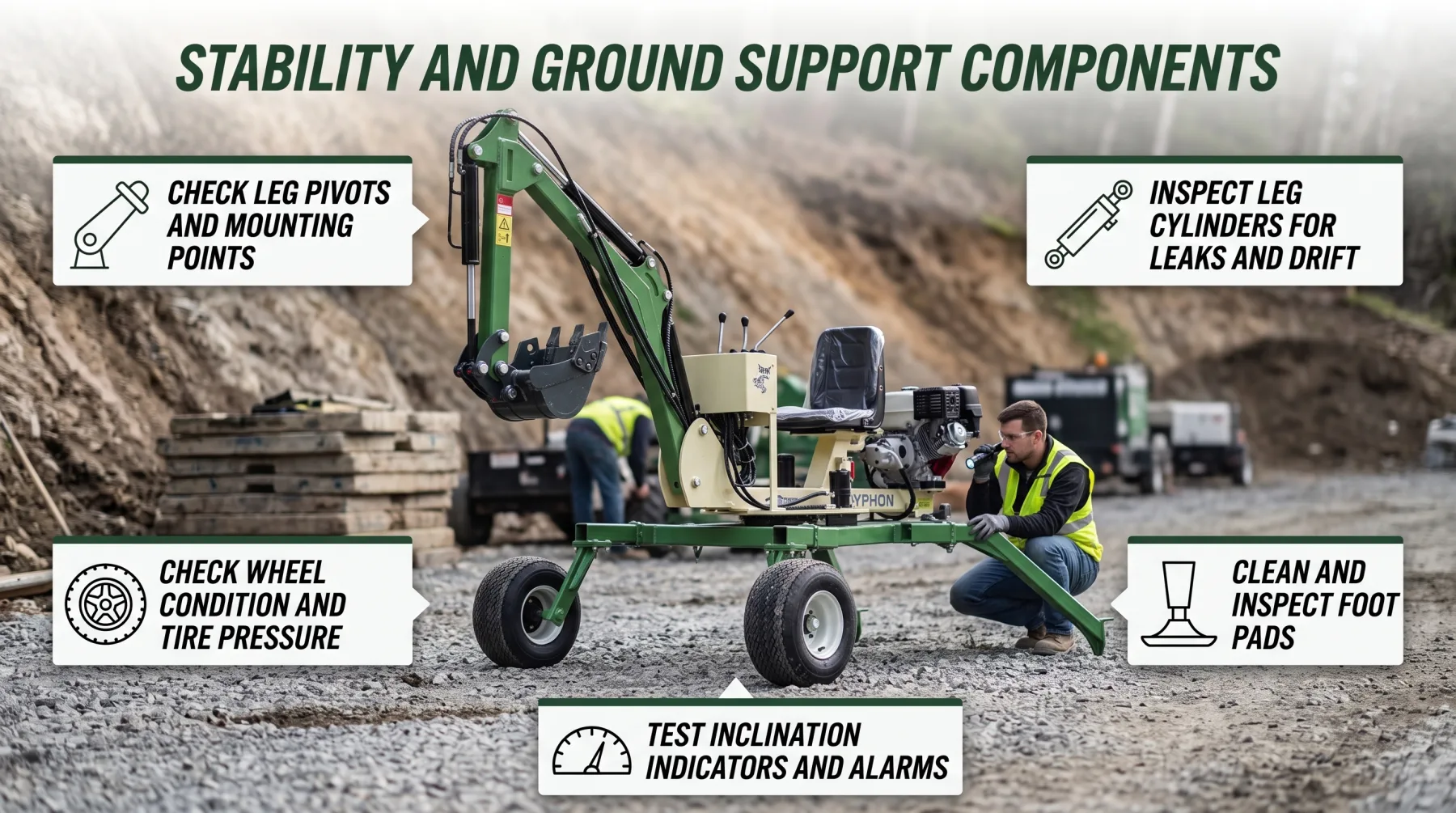
A spider mini excavator depends on its legs, cylinders, tracks, wheels, foot pads, and leveling systems to maintain stability on slopes and uneven ground. Because these components carry changing loads during excavation and positioning, regular inspection is important before demanding work.
- Leg Pivots & Cylinders: Check pivots, bushings, mounting points, cylinders, and pins for wear, cracks, leaks, or movement.
- Tracks & Wheels: Inspect track tension, tread, tires, rollers, idlers, sprockets, and related components for damage or excessive wear.
- Foot Pads & Contact Points: Check pads and ground contact points for cracks, bending, missing hardware, and packed debris that could affect support.
- Leveling Systems: Confirm inclination indicators and tilt warnings operate correctly and provide accurate information during setup.
- Stability Inspection: Repair damaged or worn stability components before operating the machine on slopes or uneven terrain.
Key takeaway: Support legs, leg cylinders, tracks, wheels, foot pads, and inclination systems carry the machine’s weight on uneven terrain, so inspect them regularly and repair any damage before demanding work.
Cleaning and Scheduled Maintenance
Spider excavators often work in muddy, wet, or vegetation-heavy conditions, so dirt and debris can collect around hydraulic components, leg joints, the undercarriage, and cooling areas. Regular cleaning helps keep these areas visible for inspection and reduces the chance of buildup hiding leaks, cracks, worn components, or other problems. Removing mud and vegetation after demanding work also helps protect components from prolonged moisture and keeps cooling surfaces clear.
Daily cleaning should be followed by scheduled maintenance based on the manufacturer’s recommended service intervals. Routine service may include lubrication, fluid and filter replacement, and inspection of hydraulic hoses, bushings, undercarriage components, structural parts, and other major systems. Cleaning and maintenance methods should also match the manufacturer’s recommendations, particularly around seals, bearings, electrical components, radiators, and hydraulic connections.
Keeping accurate maintenance records helps track service history and identify recurring problems before they become more serious. Record operating hours, inspections, repairs, and replaced components so maintenance can be planned around the machine’s workload. More complex hydraulic repairs, structural work, and other specialized maintenance should be handled by qualified technicians using the manufacturer’s procedures and approved service information.
Key takeaway: Regular cleaning makes inspection easier and protects machine components, while scheduled lubrication, filter replacement, fluid changes, and service keep the spider excavator in dependable operating condition.
Conclusion
Regular maintenance helps a spider mini excavator operate safely and reliably on slopes, confined sites, and difficult terrain where stable machine positioning is especially important. Before each shift, the machine should be parked on firm, level ground with the bucket lowered, the engine shut off, and the key removed before inspection. A complete walkaround can identify fresh fluid leaks, loose hardware, cracks, bends, or impact damage on the boom, arm, bucket, and other structural components before excavation begins. Engine oil, coolant, fuel, and hydraulic fluid should be checked according to the manufacturer’s procedures, while the air filter restriction indicator, radiator, and cooler screens should be inspected to maintain proper engine and hydraulic cooling. Hydraulic hoses, fittings, and cylinders require careful inspection for leaks, abrasion, and damage because reliable hydraulic movement is essential for the boom, arm, swing, and support legs. Pins, bushings, retainers, bucket teeth, quick couplers, and secondary attachment locks should be checked for wear, looseness, and secure engagement. Stability-related components, including leg pivots, leg cylinders, foot pads, tracks, and wheels, should also be inspected before the machine is positioned on challenging ground, with all lubrication points serviced according to the manufacturer’s schedule. Seat belts, hydraulic lockout systems, controls, horns, lights, and inclination indicators should be tested before operation, while inspection findings and upcoming service requirements should be recorded in the maintenance log. Consistent daily inspections combined with scheduled servicing help identify developing problems early, maintain attachment security and machine stability, and keep the spider excavator ready for demanding excavation work with fewer unexpected interruptions.
Frequently Asked Questions
How often should a spider mini excavator be inspected?
Complete a basic inspection before each day’s operation to identify leaks, damage, loose components, and other visible issues. Detailed service should follow the manufacturer’s recommended intervals based on operating hours and maintenance requirements. Machines working frequently or in demanding terrain may require closer inspection and more frequent servicing.
Why is hydraulic maintenance important?
The hydraulic system operates the boom, arm, bucket, swing, support legs, and other machine functions. Low fluid levels, leaks, damaged hoses, or contaminated hydraulic fluid can reduce performance and affect smooth machine movement. Regular inspection and proper hydraulic maintenance are especially important when the excavator is working on uneven ground where precise control and stable positioning are required.
What should be checked on the excavator attachment?
Inspect pins, bushings, couplers, secondary locks, hydraulic connections, and the attachment structure before every shift. Look for looseness, cracks, excessive wear, damaged components, or hydraulic leaks. Confirm that the attachment is correctly mounted and securely locked before beginning digging, lifting, or material-handling work.
Why should a spider mini excavator be cleaned regularly?
Removing soil, mud, and debris makes it easier to identify leaks, cracks, loose hardware, and worn components during inspections. Cleaning also protects grease points, reduces material buildup around moving parts, and helps keep cooling surfaces clear. Regular cleaning makes maintenance easier and supports reliable machine operation.