

Moving thousands of pounds of commercial inventory requires much more than just raw engine power and strong hydraulic cylinders. Every successful lift depends on a flawless mastery of physics and structural balance to keep the machinery firmly planted on the ground. When your operators pick up a heavy pallet, they rely entirely on a carefully engineered counterbalance to prevent the equipment from violently pitching forward. Without this massive, silent component, executing heavy material handling tasks would be physically impossible and incredibly dangerous for your workforce. We understand that maintaining a safe, highly productive facility requires equipping your team with a deep understanding of how their machinery actually works.
The secret to safe material handling lies at the very back of the machine. This comprehensive guide explores exactly how forklift counterweights keep loads balanced and protect your daily warehouse operations. We will examine the core mechanics behind the forklift counterweight system, explaining why it matters so much in heavy equipment design. You will also learn how the counterweight interacts dynamically with load weight and mast positioning during a lift. By understanding these critical balance limits, you can empower your operators to make safer decisions and protect your valuable inventory from entirely preventable accidents.
The Core Mechanics of the Forklift Counterweight System
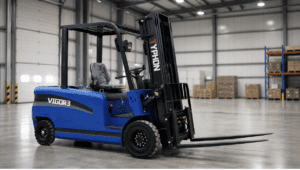
To understand how heavy machinery stays upright, you must first look at the equipment as a highly advanced, mobile seesaw. The front drive wheels of the machine act as the central pivot point, or fulcrum, for the entire balancing act. When an operator slides the steel forks underneath a heavy pallet, that inventory applies massive downward leverage on the front of the seesaw. To prevent the machine from tipping forward over those front wheels, an equal or greater downward force must be applied to the back of the equipment.
This is exactly where the forklift counterweight system comes into play. Manufacturers install a massive, exceptionally dense block of material at the extreme rear of the machine’s chassis. This heavy block anchors the back end of the equipment to the concrete floor, perfectly offsetting the forward leverage generated by the payload. The precise weight of this rear component is calculated down to the exact pound during the engineering phase. This mathematical precision ensures that the machine can safely lift its maximum rated capacity without losing its grip on the warehouse floor.
Why Counterweights Matter in Heavy Equipment Design
Designing a commercial material handler requires balancing maximum lifting power with a practical, maneuverable physical footprint. Engineers cannot simply make the machine longer to increase its leverage, because a long machine cannot navigate tight warehouse aisles or load standard shipping containers. Instead, they must maximize the density of the rear of the machine to provide immense balancing power within a very short wheelbase. This spatial limitation makes the engineering of the rear mass one of the most critical aspects of the entire manufacturing process.
Most commercial counterweights are constructed from solid cast iron or hollow steel shells filled with heavily compacted concrete and metal scrap. These exceptionally dense materials allow manufacturers to pack thousands of pounds of balancing force into a very small, aerodynamic shape. The counterweight is then seamlessly integrated into the rear chassis, often serving double duty as the protective rear bumper of the machine. This brilliant design protects the delicate internal engine components from rear-end collisions while providing the necessary anchor for heavy lifting.
The Interaction Between Load Weight and the Counterweight
The balancing act between the rear mass and the front payload is not a static relationship; it changes dynamically with every single load. When the machine is completely empty, the center of gravity rests heavily toward the back tires, safely secured by the dense iron block. As the operator picks up a pallet of goods, the combined center of gravity of the equipment pulls forward toward the front drive wheels. The heavier the payload on the forks, the harder the rear anchor must work to maintain the physical balance of the machine.
If an operator attempts to lift a load that exceeds the maximum rated capacity of the equipment, the forward leverage will completely overwhelm the rear mass. When this happens, the massive iron block in the back is simply no longer heavy enough to anchor the machine to the floor. The rear steering tires will immediately lift off the concrete, causing the operator to lose all steering control as the machine tips forward. Respecting the relationship between the weight of your inventory and the anchoring power of the rear mass is the absolute foundation of safe material handling.
How Mast Position Impacts Machine Balance
Load weight is not the only factor that actively challenges the balancing power of your heavy equipment. The physical position of the lifting mast dramatically alters the center of gravity and changes how effectively the rear mass can anchor the machine. When an operator raises a heavy pallet high into the air to access a top-tier storage rack, the center of gravity moves drastically upward. A high center of gravity reduces the overall stability of the machine, making the rear anchor much less effective at preventing lateral rollovers or forward tipping.
Furthermore, the tilt function of the mast plays a massive role in the balancing physics of the equipment. Tilting a heavy load backward toward the operator’s cab shifts the center of gravity safely toward the rear iron block, increasing overall stability during transit. Conversely, tilting a heavy load forward shifts the center of gravity out over the front wheels, aggressively fighting against the rear anchor. Operators must understand that tilting a heavy load forward while elevated is one of the most dangerous maneuvers in material handling, as it easily overwhelms the counterbalance and causes immediate tip-overs.
Understanding Balance Limits and Equipment Capacity
Every piece of lifting equipment features absolute physical limits that cannot be negotiated or ignored. The forklift counterweight system is engineered to handle a very specific maximum tonnage based on a standardized load center. Your operators must understand that the maximum capacity printed on the machine’s data plate is directly tied to the exact weight of the iron block sitting behind them. Adding additional unauthorized weight to the back of the machine to lift a heavier payload is a severe safety violation that routinely leads to catastrophic structural failures.
When a facility requires moving heavier materials, the only safe solution is investing in a larger machine equipped with a heavier factory-engineered rear mass. Facility managers must proactively audit the weight of their incoming inventory and cross-reference it against the rated capacities of their current fleet. If your operators are frequently experiencing “light steering,” where the rear wheels feel loose during a lift, they are dangerously close to overwhelming the rear anchor. Recognizing these mechanical warning signs prevents devastating workplace accidents and protects your highly valuable commercial inventory.
Practical Safety Strategies for Warehouse Operators
Maintaining a secure facility requires translating these complex engineering principles into practical, everyday habits for your workforce. Operators must be trained to treat the rear mass of the machine as a critical safety device rather than just a heavy bumper. When picking up a load, the operator should always ensure the forks are pushed completely flush against the pallet to keep the weight as close to the front wheels as possible. Keeping the load tucked in tightly minimizes the forward leverage and allows the rear anchor to work at its maximum engineered efficiency.
Additionally, operators must strictly follow travel protocols that protect the balance of the machine during transit. Traveling with the load lowered to just a few inches above the floor keeps the center of gravity low and secure. Operators should always tilt the mast slightly backward before driving, shifting the payload’s weight closer to the heavy iron block in the rear. These simple, highly effective daily habits ensure the counterbalance functions exactly as intended, keeping the machine perfectly planted during sudden stops or sharp turns.
Conclusion
The safety and efficiency of your entire material handling operation rely entirely on the silent, heavy work performed by the back of your machinery. You cannot afford to let your operators lift heavy inventory without a profound understanding of how their equipment maintains its physical balance. A deep respect for the forklift counterweight system empowers your workforce to make intelligent, calculated decisions every time they engage the hydraulic lift controls.
We encourage you to review your internal training programs and emphasize the physics of equipment balance with your dedicated team. Ensure your operators understand exactly how load weight, mast elevation, and tilt angles interact with the rear mass of their machines. By prioritizing mechanical education and enforcing strict lifting limits, you guarantee the continuous reliability of your fleet and secure a highly productive, exceptionally safe future for your warehouse operations.