


The battery is the main power source of an electric forklift. It is also one of the most expensive parts of the machine. Many people misunderstand how important it is to take care of the battery. Battery maintenance should not be done only occasionally. It needs to be done regularly because it affects how well the forklift works, how safe the workplace is, and how much money the company spends. A battery that is well maintained can last for many years, while a poorly maintained one can fail early and cause expensive downtime and replacement costs.
For warehouse managers and forklift operators, knowing how to properly care for the battery is very important. The performance of an electric forklift depends heavily on the condition of its battery. When the battery is in good shape, the forklift can work efficiently throughout the day. By following a regular maintenance routine, you protect your equipment, keep work running smoothly, and help create a safer workplace.
This guide explains the basic steps for electric forklift battery maintenance. It covers important tasks like proper charging, adding water, cleaning the battery, and storing it correctly. By following these practices, you can help extend the battery’s life, lower operating costs, and keep your forklifts running reliably.
The Importance of Proper Charging Practices
How you charge your forklift battery has the most significant impact on its service life. Lead-acid batteries are designed for a finite number of charge cycles, typically around 1,500. Every time you connect the battery to a charger, you use one of these cycles. Therefore, developing a strategic charging protocol is essential to get the most value from your investment.
Avoid Opportunity Charging
“Opportunity charging” refers to the practice of plugging in a battery for short periods during breaks or lulls in activity. While it may seem like a good way to keep the battery topped off, it is one of the most detrimental habits. This practice rapidly consumes valuable charge cycles without allowing the battery to complete the full chemical process it needs. It also accelerates heat buildup, which degrades the battery’s internal components. As a rule, a battery should only be charged when it has been discharged to 20-30% of its capacity.
Complete the Full Charge Cycle
Once a charge cycle is initiated, it is critical to allow it to complete fully. Interrupting the charge to put a forklift back into service prevents the battery from reaching a state of full saturation and balance. Consistently undercharging the battery leads to a condition known as sulfation, where lead sulfate crystals harden on the battery plates, permanently reducing its capacity and performance. Always ensure the battery completes its standard 8-hour charge cycle.
Implement a Strict Equalization Schedule
An equalization charge is a deliberate overcharge performed to remove sulfate crystals from the battery plates and rebalance the voltage of individual cells. This corrective process is vital for reversing the negative effects of daily use and should be conducted approximately once a week or every 5-10 charge cycles. An equalization charge typically lasts an additional 3 hours after a normal charge cycle. Neglecting this step will inevitably lead to a gradual and irreversible loss of battery capacity.
The Critical Role of Proper Watering
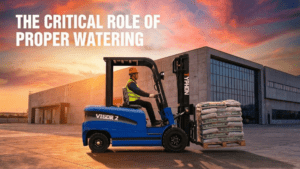
An electric forklift battery generates power through a chemical reaction between lead plates and an electrolyte solution, which is a mixture of sulfuric acid and water. During operation and charging, water is consumed through gassing and evaporation. Maintaining the correct water level within each cell is arguably the most crucial hands-on maintenance task.
When and How to Water Your Battery
The single most important rule is to water the battery only after it has been fully charged. When a battery charges, the electrolyte expands. If you add water to a discharged battery, the fluid level will rise during charging and overflow. This spill is not just water; it is corrosive sulfuric acid that can damage the forklift, the battery casing, and the concrete floor, while also posing a significant safety hazard.
After a full charge and a brief cool-down period, check the water level in each cell. The proper level is just below the vent well or plastic shield at the top of the cell. Use distilled or deionized water to avoid introducing mineral impurities that can harm the battery plates. Many facilities use a battery watering gun or a single-point watering system to ensure accurate filling without over- or under-watering.
The Dangers of Improper Watering
Letting the water level drop too low exposes the top of the lead plates to air. This causes the active material on the plates to oxidize and dry out, permanently damaging that portion of the plate and reducing the battery’s capacity. Conversely, consistently overfilling the battery dilutes the electrolyte, reducing its specific gravity and diminishing the battery’s overall performance.
Essential Cleaning and Inspection Routines

A forklift battery operates in a demanding industrial environment and is exposed to dirt, dust, and corrosive elements. A regular cleaning and inspection schedule is essential for both safety and performance.
Keeping the Battery Clean
During charging, batteries can release a fine mist of acid that, when combined with dirt and dust, creates a conductive film on top of the battery. This can lead to self-discharge, where the battery loses charge even when not in use.
At least once a month, the battery should be cleaned. Start by neutralizing any acid residue with a battery cleaning solution or a simple mixture of baking soda and water. Apply the solution, gently scrub the top of the battery with a stiff brush, and rinse thoroughly with low-pressure water, ensuring the vent caps are tightly secured to prevent water from entering the cells. A clean battery is a safer and more efficient battery.
Regular Inspection for Damage
During the cleaning process, take the opportunity to inspect the battery for any signs of physical damage. Look for cracks in the casing, corrosion on the terminals, and any frayed or damaged cables. Corroded terminals increase electrical resistance, leading to heat buildup and power loss. Clean them with a wire brush and apply a protective terminal coating. Any damage to cables should be addressed immediately by a qualified technician, as it presents a serious electrical hazard.
Safe Storage and Handling Practices
Proper storage is key to preserving battery health, especially during periods of inactivity. If a forklift will be taken out of service for an extended time, its battery requires specific preparation.
First, ensure the battery is fully charged before placing it in storage. A discharged battery will sulfate rapidly, leading to permanent damage. Store the battery in a clean, cool, and dry location, away from direct sunlight and extreme temperatures. It is recommended to give the battery a freshening charge once a month to prevent self-discharge and maintain its health.
The Benefits of a Disciplined Approach

Implementing a robust electric forklift battery maintenance program delivers clear and measurable benefits. It directly extends the service life of your most expensive wearable component, delaying a capital expenditure of thousands of dollars. A healthy battery holds its charge longer and delivers consistent power, which translates to improved forklift performance and higher productivity throughout a shift.
Furthermore, a well-maintained battery is a safer battery. By preventing acid spills, corrosion, and cable damage, you significantly reduce the risk of chemical burns and electrical fires in your workplace. This commitment to maintenance protects not only your equipment but also your most valuable asset: your employees.
Conclusion
Proper electric forklift battery maintenance is not just a best practice—it’s a critical investment in the longevity, safety, and efficiency of your operations. By following disciplined routines for charging, watering, cleaning, and storage, you can significantly extend the life of your batteries, reduce costly downtime, and maximize the performance of your forklifts.
A well-maintained battery ensures consistent power, minimizes safety risks, and helps you avoid unexpected replacement expenses. Whether it’s implementing a strict charging protocol, maintaining proper water levels, or conducting regular inspections, these small but essential steps have a big impact on your bottom line.
By prioritizing battery care, you not only protect your equipment but also create a safer, more productive workplace. Start building a maintenance routine today, and you’ll see the benefits in both your operational efficiency and your long-term cost savings.