

Selecting the right heavy machinery dictates the success, safety, and profitability of your entire contracting operation. You rely on your equipment to perform flawlessly under demanding conditions. When faced with compact job sites, contractors inevitably debate between two industry heavyweights. You must evaluate the mini excavator vs skid steer to determine which machine will deliver the highest return on your investment.
Both machines offer incredible versatility and raw power in a compact footprint. However, they serve fundamentally different primary purposes on the job site. Making the wrong choice leads to frustrating project delays, increased manual labor, and blown operational budgets. We want to empower you with the exact knowledge required to optimize your heavy equipment fleet.
This comprehensive construction equipment comparison breaks down everything you need to know about these two exceptional machines. We will explore their core mechanical differences, weigh their distinct pros and cons, and highlight their absolute best applications. By understanding the true cost and capability of each machine, you can confidently secure the best equipment for your upcoming contracts.
Understanding the Key Mechanical Differences
You must look beyond the physical size of these machines to understand their distinct advantages. Engineers designed the mini excavator and the skid steer to solve completely different job site challenges. Recognizing how they move and operate forms the foundation of a smart purchasing decision.
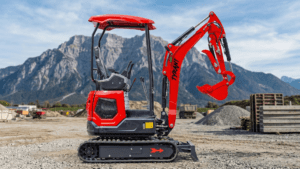
A mini excavator functions primarily as a stationary digging tool. The machine features a heavy tracked undercarriage and a fully rotating upper house. The operator can dig a deep trench in front of the machine, rotate the cabin 360 degrees, and dump the heavy material directly behind them. The undercarriage remains perfectly still during this entire cycle, which drastically reduces ground disturbance.
Conversely, a skid steer operates as a highly mobile material handler. These machines use four independently driven wheels or two continuous rubber tracks to navigate the job site. To move material, the skid steer must drive forward to scoop the dirt, reverse, turn its entire body, and drive to the dumping location. This constant movement requires more open space and inherently disturbs the ground beneath the machine.
Evaluating the Mini Excavator
The mini excavator has fundamentally transformed how contractors approach foundational digging and utility work. These highly capable machines bring the massive breakout force of a full-sized earthmover into tightly restricted residential spaces. When your project demands precision digging, the compact excavator stands unmatched.
Core Advantages and Drawbacks
The greatest advantage of a mini excavator lies in its dedicated digging geometry. The long articulated boom allows operators to dig deep trenches while maintaining excellent visibility of the work area. The tracks provide superior stability on uneven terrain, and the zero tail swing design ensures the machine can operate safely directly against existing concrete structures.
However, the mini excavator does face certain limitations. They travel across job sites at very slow speeds compared to wheeled machinery. Furthermore, their attachment ecosystem is slightly more limited than a skid steer, focusing primarily on digging, demolition, and lifting tasks.
Best Applications for Compact Excavators
Utility contractors rely almost exclusively on mini excavators for their daily operations. These machines excel at digging precise trenches for new water mains, sewer pipes, and electrical conduits. Their ability to dig deep without leaving tracks makes them the perfect tool for working alongside active roadways.
Plumbing contractors and residential landscapers also heavily favor these machines. They easily navigate through narrow backyard fence gates to dig out swimming pools or repair broken foundation drainage systems. When paired with a hydraulic breaker, they become incredibly effective demolition tools for shattering old concrete patios.
Evaluating the Skid Steer Loader
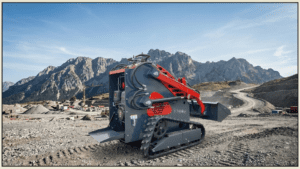
The skid steer loader holds the title of the most versatile piece of machinery on the modern job site. These aggressive, highly mobile machines act as the ultimate utility players for construction crews. They move massive volumes of material quickly and can adapt to almost any challenge.
Core Advantages and Drawbacks
Versatility remains the absolute greatest strength of the skid steer. You can swap the standard dirt bucket for hydraulic augers, trenchers, sweepers, or pallet forks in a matter of seconds. Additionally, wheeled skid steers travel incredibly fast across hard surfaces, allowing operators to transport heavy materials across massive commercial sites rapidly.
Despite this versatility, skid steers present specific operational challenges. Because the lift arms sit directly alongside the cabin, operator visibility can be restricted, especially when reversing. Furthermore, wheeled skid steers struggle heavily in deep mud and can easily tear up delicate landscaping with their aggressive turning radius.
Best Applications for Skid Steers
General contractors frequently view the skid steer as the best machine for small projects that require constant material handling. They excel at loading heavy debris into commercial dumpsters and moving massive pallets of brick around active building sites. Their speed makes them perfect for final site grading and spreading topsoil across wide, open properties.
Snow removal professionals also depend heavily on skid steers during the winter months. Equipped with a heavy-duty snow pusher or a hydraulic snow blower, a skid steer can clear commercial parking lots significantly faster than a standard pickup truck.
The Best Machine for Small Projects
Determining the ultimate winner between these two machines depends entirely on your primary operational focus. You must audit your most frequent daily tasks to make a professional, cost-effective decision.
If your business spends eighty percent of its time digging trenches, pulling stumps, or working on steep slopes, you must invest in a mini excavator. The sheer digging power and stability will drastically reduce your manual labor costs and keep your projects strictly on schedule.
If your crew spends the majority of their day moving palletized materials, loading dump trucks, or sweeping streets, the skid steer serves as your perfect solution. The unmatched attachment ecosystem ensures that this single machine will remain actively engaged and highly profitable all year long.
Construction Equipment Comparison: Cost Analysis
Financial discipline separates thriving contracting businesses from those that struggle to survive. You must evaluate the total cost of ownership before signing any heavy equipment financing agreement. The initial purchase price represents only a fraction of the actual capital required to run these machines.
Analyzing Upfront Costs
Generally speaking, a new skid steer requires a slightly lower initial investment than a comparably sized mini excavator. The complex hydraulic rotating house and heavy undercarriage of the excavator drive up its manufacturing costs. However, you must also factor in the cost of attachments. Equipping a skid steer with five different hydraulic tools will quickly push its total acquisition cost past that of a standard excavator.
Calculating Operating Expenses
Tracked machines, including mini excavators and compact track loaders, carry significantly higher maintenance costs than wheeled skid steers. Replacing heavy-duty rubber tracks and worn undercarriage sprockets requires a substantial maintenance budget. Conversely, wheeled skid steers simply require occasional tire replacements, which cost far less than a new set of rubber tracks.
You must also consider transportation logistics. Both machines typically fall under the weight limits required for standard commercial towing. You can transport either machine safely using a heavy-duty pickup truck and a proper tag trailer, keeping your daily heavy-hauling expenses highly manageable.
Securing Your Fleet’s Future
Choosing between a mini excavator and a skid steer requires a strategic evaluation of your specific job site environments. By matching the mechanical strengths of the machinery to your daily operational demands, you guarantee maximum productivity and crew safety. We encourage you to analyze your upcoming project pipeline to identify exactly which machine will accelerate your workflow the most.
Conclusion
Choosing between a mini excavator and a skid steer is a critical decision that directly impacts the efficiency, safety, and profitability of your contracting business. Each machine offers unique strengths tailored to specific job site demands. Mini excavators excel in precision digging, stability, and working in confined spaces, making them ideal for trenching, utility work, and demolition. On the other hand, skid steers shine in versatility, speed, and material handling, making them the go-to choice for general contractors and projects requiring diverse attachments.
To make the best decision, evaluate your daily operational needs, project pipeline, and budget considerations. By aligning the machine’s capabilities with your business requirements, you can maximize productivity, reduce costs, and secure a competitive edge in the industry. Investing in the right equipment ensures your fleet remains profitable, adaptable, and ready to tackle any challenge.