


Heavy machinery can move massive loads and tackle tough earthmoving tasks thanks to incredible, often unseen forces within its hydraulic system. When reviewing equipment specifications, operators frequently encounter two key measurements: gallons per minute (GPM) and pounds per square inch (PSI). This brings up the critical question of hydraulic flow vs pressure—and how these forces work together to make the machine perform.
Many operators ask: Does a higher flow rate make an excavator faster? Does more pressure make a wheel loader stronger? The answer is that both play essential but very different roles in a machine’s operation. Hydraulic flow and pressure control separate aspects of work, and understanding how they interact is crucial for optimizing performance.
In this guide, we’ll break down the differences between hydraulic flow and hydraulic pressure. You’ll see how each affects your equipment’s efficiency and capabilities on the job site, from high flow for fast operation to high pressure for maximum lifting power. By mastering these concepts, you can fine-tune your heavy machinery setup, improve hydraulic system performance, and boost productivity on every project.
The Basics of Understanding Hydraulic Power
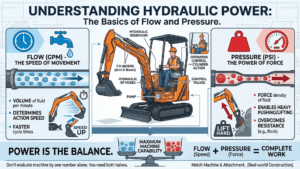
To utilize your heavy equipment effectively, you must understand how fluid translates into mechanical energy. A hydraulic system uses a pump to push specialized oil through a network of tight hoses, heavy-duty valves, and steel cylinders. This continuous movement of fluid creates the physical actions you control from the cab.
However, the fluid itself does not just do “work” as a single concept. The work splits into two distinct categories: how fast the work happens, and how hard the work pushes. This is where we separate flow from pressure. You cannot evaluate a machine’s capability by looking at just one of these numbers. They represent two halves of a complete power equation.
When you grasp how these two forces operate independently, you can make better decisions about machine purchases, attachment compatibility, and daily operation. Let us examine exactly what each measurement represents in the real world of construction and earthmoving.
What is Hydraulic Flow?
Hydraulic flow dictates the speed of your equipment. We measure flow in gallons per minute (GPM) or liters per minute (LPM). This number represents the physical volume of hydraulic fluid that the pump can push through the system within a specific timeframe.
When you push a joystick forward to extend a hydraulic cylinder, fluid must fill the empty space inside that cylinder barrel. If your machine has a high hydraulic flow rate, the pump fills that space very quickly. As a result, the cylinder rod extends rapidly, and your loader arms raise faster.
Flow is entirely responsible for the cycle times of your machinery. A machine with superior flow will complete a repetitive task, like loading a dump truck, much faster than a machine with a lower flow rate. If your work relies on rapid, continuous movement, hydraulic flow is the primary metric you need to evaluate.
What is Hydraulic Pressure?
While hydraulic flow controls the speed of your equipment, hydraulic pressure determines its raw lifting and digging strength. Measured in pounds per square inch (PSI) or bars, pressure shows how much resistance the hydraulic fluid can overcome when pushing against a heavy load.
For example, when a wheel loader drives its bucket into a dense, compacted gravel pile, the hydraulic system immediately meets resistance. As the pump continues to push fluid, pressure builds inside the hoses and cylinders. The higher the pressure, the harder the cylinder pushes, allowing the machine to move even the heaviest materials.
Pressure is also what lets an excavator tear a stubborn tree stump from frozen ground. If the load exceeds the machine’s capacity, the hydraulic system reaches its maximum pressure limit. At this point, the safety relief valve activates to protect the hoses and cylinders, and the machine stops lifting to prevent damage. That’s why your equipment’s PSI rating is a key factor in determining its maximum lifting power and breakout force—critical metrics for any operator or fleet manager to understand.
Hydraulic Flow vs Pressure: How They Work Together
You cannot have a functional piece of heavy equipment with only flow or only pressure. True hydraulic system performance relies on the seamless partnership between these two forces. They work in tandem to provide the smooth, powerful operation you expect from professional machinery.
Imagine using a pressure washer to clean a concrete driveway. The water flow (GPM) determines how much water comes out of the wand, allowing you to wash away loose dirt quickly. The pressure (PSI) determines how hard the water hits the concrete, allowing you to strip away tough, baked-on grease. You need both to clean the driveway effectively.
In heavy equipment, the engine drives the hydraulic pump to create flow. Pressure only exists when that flow encounters physical resistance, like a heavy pallet of bricks or a dense wall of clay. The pump creates the fluid movement, and the resistance of the load creates the pressure. A highly efficient machine balances both metrics to ensure the equipment can lift heavy loads without sacrificing operational speed.
When Does Hydraulic Flow Matter Most?
Certain job site applications prioritize speed and rotational movement over raw lifting power. In these scenarios, a high hydraulic flow rate becomes the most critical factor for success. Equipment designed for continuous, rapid operation relies heavily on the volume of fluid passing through the system.
High-Speed Attachments and Cycle Times
Rotary attachments require massive amounts of fluid to maintain their operating speed. Consider tools like trenchers, cold planers, brush cutters, and sweeping brooms. These attachments utilize internal hydraulic motors that spin rapidly. To keep a brush cutter spinning at peak RPM while slicing through thick vegetation, the machine must supply a constant, massive flow of oil.
If you connect a high-demand rotary attachment to a machine with insufficient flow, the tool will stall repeatedly. The attachment’s motor will starve for fluid, causing the cutting blades to slow down and drastically reducing your productivity. This is exactly why many compact track loaders offer specialized “high-flow” auxiliary hydraulic packages specifically designed to run these demanding rotary tools.
When Does Hydraulic Pressure Matter Most?
While flow handles the speed of rotary attachments, pressure takes over when the job demands aggressive, brute force. Tasks that require lifting, prying, or crushing depend entirely on the maximum PSI your hydraulic system can safely generate.
Heavy Lifting and Breakout Force
Consider an excavator tasked with breaking through solid bedrock. The operator attaches a heavy-duty hydraulic breaker to the end of the stick. While the breaker needs some flow to cycle, the actual shattering of the rock relies on intense hydraulic pressure driving the heavy steel chisel downward.
Similarly, when a forklift attempts to raise a maximum-capacity load of steel beams, the speed of the lift is irrelevant. The only thing that matters is whether the hydraulic pump can generate enough PSI to overcome the immense downward weight of the steel. If the system pressure is too low, the relief valve will open, and the load will remain firmly on the ground. When your primary goal is lifting heavy materials or digging through highly compacted soil, pressure is your most valuable asset.
Maximizing Hydraulic System Performance

Understanding the difference between flow and pressure allows you to operate your equipment more intelligently. You can protect your machinery from unnecessary wear and tear by matching your operational techniques to the machine’s specific capabilities.
Matching Attachments to Machine Specs
The most common cause of poor hydraulic system performance is mismatched equipment. Operators frequently rent or purchase attachments without verifying the tool’s flow and pressure requirements against their machine’s output.
Before connecting any hydraulic tool, read the manufacturer’s data plate on the attachment. It will clearly list the minimum and maximum GPM and PSI required for safe operation. Pushing high-flow oil into an attachment designed for standard flow will overheat the fluid rapidly and destroy the tool’s internal motor seals. Conversely, asking a standard-flow machine to run a high-flow cold planer will result in a frustrating, ineffective workday. Always match the tool to the machine’s true specifications.
The Impact of Routine Maintenance
Even the most powerful hydraulic system will lose its capability if you neglect routine maintenance. Degraded hydraulic oil cannot transfer force efficiently, leading to drops in both flow and pressure. As oil ages, it thins out and bypasses internal pump seals, directly reducing your machine’s lifting power and slowing its cycle times.
To maintain optimal performance, adhere strictly to your manufacturer’s fluid and filter replacement intervals. Keep your hydraulic reservoir filled to the correct level, as low fluid creates cavitation that destroys the pump’s ability to generate flow. Inspect your hoses and flat-face couplers daily to ensure no fluid escapes the pressurized circuit.
Conclusion
The debate of hydraulic flow vs pressure is not about which metric is inherently better. It is about understanding how speed and force work together to drive heavy machinery. Hydraulic flow provides the rapid cycle times and rotational speed necessary for efficient operation, while pressure delivers the raw, uncompromising strength required to lift and dig.
By understanding hydraulic power comprehensively, you can make informed decisions that enhance your daily operations. Evaluate your job site requirements carefully. If you spend your days running trenchers and mulchers, prioritize machines with robust high-flow capabilities. If your work revolves around lifting concrete barriers and excavating heavy clay, focus on equipment that boasts exceptional system pressure and breakout force.
Take the time today to review the hydraulic specifications of your current fleet. Check the data plates on your most frequently used attachments to ensure they perfectly match your machine’s output. By aligning your tools with the correct flow and pressure ratings, you guarantee maximum efficiency, protect your equipment from premature failure, and keep your business highly productive.